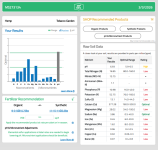
I see that this thread has been getting quite a lot of views, so I wanted to interject a word of caution to the general forum. The best piece of advice I can give, learned over and over again from this and my other hobbies: Do Not Chase Numbers, or in my local vernacular, "if it ain't broke, don't mess with it". Don't get me wrong, it's great to do a soil test occasionally so you know what's going on in your lawn and garden. I do so myself. This is valuable information to have to help you troubleshoot problems when they arise and for general heath and upkeep.
So what do I mean by not chasing numbers? To not fall in the trap of trying to get every parameter into the "perfect" range by getting into a cycle of action-test-action-test-action-test etc. Looking at the results a shot of sulfur and some micros would be a good addition this year. Would I bother retesting this year? No. See how the plants do, and react accordingly. For example, my soil tested out on the acidic side, so the first year I added some granular lime. My third year one bed started showing signs of nutrient deficiency, so it got another handful of lime - problem solved. The other beds were fine - no action needed.
A few other things to contemplate:
1) Those charts are for ideal conditions aimed primarily at farmers. Farmers get paid by weight / volume. Ideal conditions produce big plants with large yields. What they don't produce is flavor.
2) A little stress is a good thing. Plant's produce a variety of deterrent compounds in response to stress: aromatic oils in herbs, flavor compounds in fruits and veg, poisons (nicotine) when munched on... Ironically, these are the things people like!
3) The best tobacco I grew was in my "worst" beds in Texas. Alkaline shallow soil, high heat, and always water stressed. Those plants produced leaf that was highly aromatic, almost incense like. Looked horrible, tasted great.