BBFarmKY Grow Log 2027

bbfarmky

Active Member
Joined
Sep 6, 2026
Messages
28
Points
13
Location
Lebanon, Kentucky
IMG_0583-2.jpg

I realize 2027 has yet to arrive but the growing season for 2027 starts now in Fall preparations.

Converting 5,000 sq ft of pollinator habit into a grow plot. Don't worry, this only slightly over 4% of the 2.7 acres of pollinator habit so there is still plenty left for them. The surrounding pollinator habit also provides habitat for beneficial/predatory insects that will help keep troubles in check. This strategy has worked flawlessly for my other growing adventures but those details are for another conversation.

Wanted to plow early September and then disc/seed mid/late September but the weather would not permit. We were dry then and I had to wait on rain. We finally got that rain on October 15th, so a day of drying back out slightly and off to plowing I went. Let that sit for a couple days and then disc/seeded. Finally got everything done yesterday, October 19th.


Cover Crop:
Winter Oats - 12 lbs
Austrian Pea - 6 lbs
Crimson Clover - 3 lbs

The cover crops may or may not winter kill. Does not matter; the microbiology around the roots and the soil being covered will take place either way. The only difference it will make is the tasks required come Spring of 2027.

Gathered soil today for a soil test submission. I will be testing for Macro & Micro Nutrients, PH, and current state of Organic Matter. I am certain lime will have to be applied as nearly all Kentucky soils are acidic but I will wait on the actual PH to determine the quantity. Should be in a couple weeks or so (depending on the lab to turn the test around in the normal timeframe). Still plenty of time for the chemistry between the lime and the soil to take place.

Two 100' rows reserved for tobacco. Below are the varieties I purchased but I do not know yet what the distribution of plants will be. Still contemplating that portion and open to suggestions. I believe @deluxestogie recommended at least 4 of each which at this level will be a given.

  • Virginia
    • Cherry Red
    • Costello
    • GL939
  • Burley
    • Harrow Velvet
    • TN90
  • Oriental
    • Basma
    • Izmir Ozbis
  • Cigar/Pipe
    • Little Dutch

Looking forward to growing some leaf of my own, recording details of the venture, and sharing the information with you all.
 

UmbriaFarmer

Well-Known Member
Joined
Feb 18, 2026
Messages
124
Points
63
Location
Umbria Italy
View attachment 61263

I realize 2027 has yet to arrive but the growing season for 2027 starts now in Fall preparations.

Converting 5,000 sq ft of pollinator habit into a grow plot. Don't worry, this only slightly over 4% of the 2.7 acres of pollinator habit so there is still plenty left for them. The surrounding pollinator habit also provides habitat for beneficial/predatory insects that will help keep troubles in check. This strategy has worked flawlessly for my other growing adventures but those details are for another conversation.

Wanted to plow early September and then disc/seed mid/late September but the weather would not permit. We were dry then and I had to wait on rain. We finally got that rain on October 15th, so a day of drying back out slightly and off to plowing I went. Let that sit for a couple days and then disc/seeded. Finally got everything done yesterday, October 19th.


Cover Crop:
Winter Oats - 12 lbs
Austrian Pea - 6 lbs
Crimson Clover - 3 lbs

The cover crops may or may not winter kill. Does not matter; the microbiology around the roots and the soil being covered will take place either way. The only difference it will make is the tasks required come Spring of 2027.

Gathered soil today for a soil test submission. I will be testing for Macro & Micro Nutrients, PH, and current state of Organic Matter. I am certain lime will have to be applied as nearly all Kentucky soils are acidic but I will wait on the actual PH to determine the quantity. Should be in a couple weeks or so (depending on the lab to turn the test around in the normal timeframe). Still plenty of time for the chemistry between the lime and the soil to take place.

Two 100' rows reserved for tobacco. Below are the varieties I purchased but I do not know yet what the distribution of plants will be. Still contemplating that portion and open to suggestions. I believe @deluxestogie recommended at least 4 of each which at this level will be a given.

  • Virginia
    • Cherry Red
    • Costello
    • GL939
  • Burley
    • Harrow Velvet
    • TN90
  • Oriental
    • Basma
    • Izmir Ozbis
  • Cigar/Pipe
    • Little Dutch

Looking forward to growing some leaf of my own, recording details of the venture, and sharing the information with you all.
I admire guys like you who do such a thorough job of things. I'd give my left nut to have my soil analysed but back here 8n middle-ages Italy, there isn't a soil lab within a hundred miles of my place. I'd love to such things as the quantities and types of macro and micro elements I have. But in the absence of that possibility, I plough my patch, leave it a month, till it, plant with favina beans (no idea what you call them in the US but they look just like an engorged tick) and fenugreek(breaks up clay soil), plough those in early Jan, till again after a month or so, leave for a month for the first flush of weeds to really get going, till again then prep for planting my tobacco. This year I shall be growing 150 plants of Habano 2k, vuelta abajo, corojo, piloto Cubano and Nostrano del Brenta (the oldest Italian variety known to still be cultivated). 25 of the H2k will be under shadecloth.
 

bbfarmky

Active Member
Joined
Sep 6, 2026
Messages
28
Points
13
Location
Lebanon, Kentucky
I admire guys like you who do such a thorough job of things. I'd give my left nut to have my soil analysed but back here 8n middle-ages Italy, there isn't a soil lab within a hundred miles of my place. I'd love to such things as the quantities and types of macro and micro elements I have. But in the absence of that possibility, I plough my patch, leave it a month, till it, plant with favina beans (no idea what you call them in the US but they look just like an engorged tick) and fenugreek(breaks up clay soil), plough those in early Jan, till again after a month or so, leave for a month for the first flush of weeds to really get going, till again then prep for planting my tobacco. This year I shall be growing 150 plants of Habano 2k, vuelta abajo, corojo, piloto Cubano and Nostrano del Brenta (the oldest Italian variety known to still be cultivated). 25 of the H2k will be under shadecloth.
Oddly, I admire farmers who succeed by instinct or feel.

Here is what I will call a few thoughts on your statements. I hesitate to call them "pointers" because you seem to have a good system that is working for you and local context (environment, economics, resources, etc..) is everything. But, at the risk of wasting bandwidth, here goes:

  • If you do not know already, basic PH can be tested easily at home with minimal supplies. You won't get an exact reading (unless you buy a PH meter) but you will at least know if you are generally acidic, alkaline, or neutral. Here is someone's post explaining three options fairly well. PH Testing at Home Sadly, the other parts of my test cannot be accomplished without a lab to the best of my knowledge.

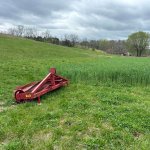
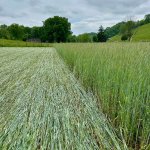
  • Here in the U.S. Favina beans are just called Fava beans. We tend to lose the romantic and artistic flow of the latin-based language converting to English... Fenugreek is new to me but research indicates it is closer-like so definitely a good choice. I am working with basically the same plan as you for year 1 because it is a new plot and I want to flush the weeds and turf as well. In subsequent years I plan to grow thick beds of rye and crimp them so as to create an ingrown mulch to plant through. I have done this in the past and it is a superb system that keeps the soil surface cooler, retains water holding capacity (drought resistance), increases microbiology, helps breed beneficial insects such as ladybugs, praying mantis, etc..., and surpasses weeds (assuming you have them somewhat flushed to begin with). But, similar to the soil test lab problem, it requires access to a roller-crimper which is an expensive piece of equipment and very large to store. Some pitfalls however:
    1. If you do not get a good, thick stand of rye...back to square 1
    2. You MUST succeed in terminating the rye...if not, you just have rye that comes back and causes more problems than the weeds would have
    3. If the weeds succeed in coming through the dead rye mat, there is basically nothing you can do to control them. Cultivating is out, weed eating can be done very cautiously, hand-pulling is labor-intensive, etc...cautious herbicide can be done but that is not my cup of tea.
These pictures show the progression from crimping to the mulch mat created for the growing season.
IMG_4285.jpgIMG_5092.jpgIMG_4489.jpgIMG_4570.jpg
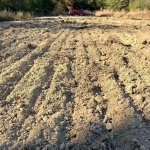
  • That is a lot of tilling you have in your plan. Fantastic for flushing the weeds and preparing your beds but really harsh on the soil structure. You might consider tilling once and then operating all follow-up mixing with a cultivator similar to mine. It still mixes soil, and probably destroys soil structure too but it does not pulverize, and uproots weeds to the top to die in the sun. It basically accomplishes what you are doing with a gentler touch on the soil. But once again, it requires a piece of equipment and space to store it. :confused: The pictures show the result of a few passes with the cultivator each separated by a week between passes.
DSC_3762.jpgfield-farmland-rut-arable-furrow.jpg
  • I am not new to farming but I am new to tobacco. Why are you employing a shade cloth for H2k? Is this just an experiment? Is H2k more sensitive to heat pressures than other varieties? Have you had trouble in the past with this? I thought tobacco was a sun-loving crop that wants as much as possible assuming proper hydration. I certainly could be mistaken though.
I hope you find my writing helpful or thought provoking and not judgmental or critical. It is not my intent to say that what I do is "better" because that is most certainly not my wish. I am far more interested in sharing knowledge and learning from each other. Best of luck in 2027 and please feel free to let me know what you think.
 

StoneCarver

Bureau for Paranormal Research and Defense
Joined
Aug 26, 2025
Messages
360
Points
93
Location
Winston-Salem,NC
I've always wondered how rye was grown for green manure. I'm assuming this is how its done. I might have gardening and landscaping experience but I don't really have "farming" experience; land costs money and when I was young I didn't have any. Heck if I'm getting started now. I'll just grow my wee garden.

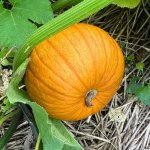
Those are some nice looking squash though. I didn't get any squash this year thanks to the furries eating the leaves.
 

bbfarmky

Active Member
Joined
Sep 6, 2026
Messages
28
Points
13
Location
Lebanon, Kentucky
I've always wondered how rye was grown for green manure. I'm assuming this is how its done. I might have gardening and landscaping experience but I don't really have "farming" experience; land costs money and when I was young I didn't have any. Heck if I'm getting started now. I'll just grow my wee garden.

Those are some nice looking squash though. I didn't get any squash this year thanks to the furries eating the leaves.
Thank you and I understand. I acquired my land at 43 years old...after retiring from the military. It was a laughable prospect before then.
 

UmbriaFarmer

Well-Known Member
Joined
Feb 18, 2026
Messages
124
Points
63
Location
Umbria Italy
Yes that rye mat looks amazing. Actually when I say tilling, I actually just mean using a shallow spring tine cultivator which is what your's appears to be. Indeed, once ploughed, I try to disturb the soil structure as little as possible and most of what I do is fairly superficial. Yes I have a pH meter and my soil is about 6.8 which tobacco seems to be pretty happy in. They have grown lots of tobacco here in the upper Tiber valley for a couple of hundred years, but it's mostly bright virginia and a little kentucky for Toscanello cigars.
I find once I mess up that first flush of weeds, I only need to hand hoe maybe three times over the next month ie June then they mostly give up. This is also because I use drip irrigation and the water only goes right to the base of each plant so the ground between the plants is as dry as a popcorn farm in a sandstorm, so very little to sustain weeds.
Each plant gets an average of 0.5 of a litre over 25 hours so 100 plants only uses 50 lots a day (about 12 gals).
Funnily enough, we have loads of ladybugs and mantis on my farm (primarily vineyard) and I've tried putting the on the tobacco plants but the flee immediately! I don't thing they like the nicotine. The only bug I have to deal with is a thing called a katydid, which looks like a small white grasshopper and they chew holes in the leaf which is a big no no for cigar leaf.
But I seek them out every morning when I do my daily inspection and just squish them by hand. There's only ever a couple on each plant and I usually get them before they have a chance to get into their stride.
I grow some plants under shade as you get much thinner wrapper leaves like that with no gnarly veins, for a much finer looking cigar.
Yes by all means, let's keep each other posted with progress.
 

bbfarmky

Active Member
Joined
Sep 6, 2026
Messages
28
Points
13
Location
Lebanon, Kentucky
Yes that rye mat looks amazing. Actually when I say tilling, I actually just mean using a shallow spring tine cultivator which is what your's appears to be. Indeed, once ploughed, I try to disturb the soil structure as little as possible and most of what I do is fairly superficial. Yes I have a pH meter and my soil is about 6.8 which tobacco seems to be pretty happy in. They have grown lots of tobacco here in the upper Tiber valley for a couple of hundred years, but it's mostly bright virginia and a little kentucky for Toscanello cigars.
I find once I mess up that first flush of weeds, I only need to hand hoe maybe three times over the next month ie June then they mostly give up. This is also because I use drip irrigation and the water only goes right to the base of each plant so the ground between the plants is as dry as a popcorn farm in a sandstorm, so very little to sustain weeds.
Each plant gets an average of 0.5 of a litre over 25 hours so 100 plants only uses 50 lots a day (about 12 gals).
Funnily enough, we have loads of ladybugs and mantis on my farm (primarily vineyard) and I've tried putting the on the tobacco plants but the flee immediately! I don't thing they like the nicotine. The only bug I have to deal with is a thing called a katydid, which looks like a small white grasshopper and they chew holes in the leaf which is a big no no for cigar leaf.
But I seek them out every morning when I do my daily inspection and just squish them by hand. There's only ever a couple on each plant and I usually get them before they have a chance to get into their stride.
I grow some plants under shade as you get much thinner wrapper leaves like that with no gnarly veins, for a much finer looking cigar.
Yes by all means, let's keep each other posted with progress.
Oh, I see. Yes it is a spring tine (danish) cultivator. That picture actually show me going pretty deep but that was another field where I was dealing with Johnson Grass so I was going for the rhizomes; I normally would only be down 2"-3" instead of the 8"-12" in the picture.

That is excellent PH. Sadly mine is 5.6 and I am working lime in. I just applied 200 lbs today over 5,000 sq ft. I wanted 250 lbs but all I have is a bucket and my hand so I have to fill the bucket 8 times and walk the rows throwing lime. I would have no way to evenly distribute the two more buckets needed for the last 50 lbs. But that is okay too. I'll let this sit and check it again in the Spring. Assuming it will still need some more I will apply it then and have less chance of shocking the soil. Sometimes everything works out for a reason.

I use drip irrigation in my garden but there is no water source in that field. That is another good reason to transition to the rye mat and retain as much rainfall as I can.

I never thought about the predatory insects avoiding tobacco plants. It has always worked so well with the vegetables but they are so much sweeter and don't have nicotine. We'll have to see how things play out.
 
Top