Growing cigar leaf in central Italy: @UmbriaFarmer

UmbriaFarmer

Member
Joined
Feb 18, 2026
Messages
22
Points
13
Location
Umbria Italy
Hi there
I'm an old guy who's lived in central Italy for 25 or so years. I have 5 hectares of sunny, south facing land which includes a vineyard I planted myself with 1100 pinot nero vines. I've grown and cured leaf for pipe tobacco but this year decided to produce some cigar leaf partly because my usual Cuban cigars are now priced out of my reach but also because the quality of them has gone downhill so far they are just a complete waste of money these days.
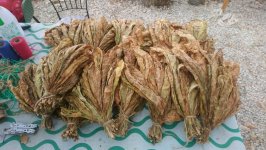
Sooo...I planted 96 criollo plants this spring, 86 in full sun, 10 under shade cloth. The cultivation was successful and all but the very last priming of ligero are now curing in my very airy barn. I think the conditions are very good as the temp/rh variation goes from about 22°c/75% at 3am to 36°c/25% at 3pm and there is plenty of natural airflow through the barn. Currently I have the first 5 priming curing, about 1500 leaves, all in various stages of cure, but now I need to get ready for fermentation.
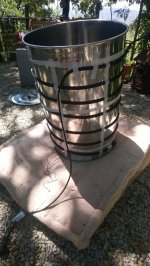
After much deliberation I've decided to ferment my leaf in various sizes of stainless steel barrels in hands of 25. I can control the temp and humidity fairly easily, I have almost unlimited free solar electricity and this method saves me the work of building a walk in fermentation chamber and also allows me to ferment the different primings at different temps, rh and duration.
And this is where I need the help of the many in this group who are far more knowledgeable than me...
The leaf ranges from ultra thin shade grown wrapper to (surprisingly big) very gnarly ligero and I believe very need substantially different fermentation protocols. Is anybody able to tell me optimum temps/rh levels/fermentation duration for these different priming?
If it has any bearing on the processing, I like strong, full bodied cigars, so that's the type of finished leaf I'd like to end up with.
This year is just me dipping my toe in the water, next year I plan on growing maybe 4 different Cuban varieties to create more complex cigars.
I'd really appreciate and help you can give me as obviously I don't want to fuck this up, having got this far!
 

deluxestogie

Administrator
Staff member
Joined
May 25, 2011
Messages
26,430
Points
113
Location
near Blacksburg, VA
I disagree with most cigar marketeers, and the cigar "expert" commentators. My impression, over the years, is that the temperature and humidity of kilning leaf (that is already fully color-cured) is not dependent on tobacco variety or priming level (or on shade-grown or sun-grown). I don't know if seco kilning (fermentation) runs faster than ligero kilning, but I do know that kilning a leaf for a longer duration than it requires does not damage it. And all leaf needs to rest for at least a few weeks after kilning. Some harsher varieties need to rest for a few years.

Regardless of kilning, tobacco continues to naturally ferment (age) for maybe 10 years, slowly eliminating the last of its albuminous proteins, and losing some volatile terpenes. Natural aging is facilitated by the intrinsic oxidase enzymes within the leaf lamina. "Strength" and harshness are directly determined by the tobacco variety, the leaf priming level, and the seasonal variations in growing conditions.

So, my standard recommendation is to kiln at 123°F to 128°F (relative humidity greater than 70%) for 6 to 8 weeks. Then allow the leaf to rest.

Bob
 

UmbriaFarmer

Member
Joined
Feb 18, 2026
Messages
22
Points
13
Location
Umbria Italy
I disagree with most cigar marketeers, and the cigar "expert" commentators. My impression, over the years, is that the temperature and humidity of kilning leaf (that is already fully color-cured) is not dependent on tobacco variety or priming level (or on shade-grown or sun-grown). I don't know if seco kilning (fermentation) runs faster than ligero kilning, but I do know that kilning a leaf for a longer duration than it requires does not damage it. And all leaf needs to rest for at least a few weeks after kilning. Some harsher varieties need to rest for a few years.

Regardless of kilning, tobacco continues to naturally ferment (age) for maybe 10 years, slowly eliminating the last of its albuminous proteins, and losing some volatile terpenes. Natural aging is facilitated by the intrinsic oxidase enzymes within the leaf lamina. "Strength" and harshness are directly determined by the tobacco variety, the leaf priming level, and the seasonal variations in growing conditions.

So, my standard recommendation is to kiln at 123°F to 128°F (relative humidity greater than 70%) for 6 to 8 weeks. Then allow the leaf to rest.

Bob
Well jeez, that's such a nice, simple to follow regime. Thanks so much. Very easy for me to achieve especially as it means I can do all the priming together or worst case in two separate s/steel cans as I will be processing about 70 hands and have one 50 and one 100 litre can. Presumably I will need to unpack, air out and if necessary recase every couple of days?
 

Wombat_smokes

Well-Known Member
Joined
Jul 7, 2025
Messages
208
Points
93
Location
Utah
Make sure to read up on kilns and curing processes in the Key Forums thread.

Also, making your own pilones (esp. in a container of any sort) will risk molding if not maintained at the prescribed temperature (125°F/50°C with 3°F variance Bob mentioned). You will need to rotate the leaves regularly to "air out" and inspect for mold.
 

UmbriaFarmer

Member
Joined
Feb 18, 2026
Messages
22
Points
13
Location
Umbria Italy
Make sure to read up on kilns and curing processes in the Key Forums thread.

Also, making your own pilones (esp. in a container of any sort) will risk molding if not maintained at the prescribed temperature (125°F/50°C with 3°F variance Bob mentioned). You will need to rotate the leaves regularly to "air out" and inspect for mold.
Indeed, I had come to believe from what I'd read (I've been doing as much research as possible) that I should be reasonable safe from mold as long as I maintain 50°C, as I believe it's pretty hard for mold to survive at that temp. Yes, I shall be airing out and repacking frequently.
 

UmbriaFarmer

Member
Joined
Feb 18, 2026
Messages
22
Points
13
Location
Umbria Italy
I disagree with most cigar marketeers, and the cigar "expert" commentators. My impression, over the years, is that the temperature and humidity of kilning leaf (that is already fully color-cured) is not dependent on tobacco variety or priming level (or on shade-grown or sun-grown). I don't know if seco kilning (fermentation) runs faster than ligero kilning, but I do know that kilning a leaf for a longer duration than it requires does not damage it. And all leaf needs to rest for at least a few weeks after kilning. Some harsher varieties need to rest for a few years.

Regardless of kilning, tobacco continues to naturally ferment (age) for maybe 10 years, slowly eliminating the last of its albuminous proteins, and losing some volatile terpenes. Natural aging is facilitated by the intrinsic oxidase enzymes within the leaf lamina. "Strength" and harshness are directly determined by the tobacco variety, the leaf priming level, and the seasonal variations in growing conditions.

So, my standard recommendation is to kiln at 123°F to 128°F (relative humidity greater than 70%) for 6 to 8 weeks. Then allow the leaf to rest.

Bob
I wanted to ask you too, what are the right conditions for resting after fermentation, level of case, aerobic versus anaerobic etc. And in physical terms, imagine you are dealing with 70 hands? Would you undo the hands, frogleg the filler leaf and pack it flat, for example? Store it in burlap or vacuum bags?
 

deluxestogie

Administrator
Staff member
Joined
May 25, 2011
Messages
26,430
Points
113
Location
near Blacksburg, VA
what are the right conditions
I usually do not tie tobacco into hands, except for show. And I usually kiln leaf as either hanging strings of leaf within the kiln, or within open plastic bags inside the kiln. As far as storage conditions afterwards, I either leave or place them into large bags, then store the bags in whatever ambient conditions exist within a spare bedroom of my house, which is not air-conditioned, but is heated in winter. If the leaf is in low case, then I close the bag. If it is in a higher case, then I leave the bag open until it dries down a bit.

Summary: I don't pay much attention to the conditions for aging. It just gets older as it sits in the same temps and humidity that I sit in (—and I too get older). In the primitive days before the advent of electricity, those poor folks didn't even have digital controllers! And yet they managed to produce excellent tobacco.

Bob
 

UmbriaFarmer

Member
Joined
Feb 18, 2026
Messages
22
Points
13
Location
Umbria Italy
I usually do not tie tobacco into hands, except for show. And I usually kiln leaf as either hanging strings of leaf within the kiln, or within open plastic bags inside the kiln. As far as storage conditions afterwards, I either leave or place them into large bags, then store the bags in whatever ambient conditions exist within a spare bedroom of my house, which is not air-conditioned, but is heated in winter. If the leaf is in low case, then I close the bag. If it is in a higher case, then I leave the bag open until it dries down a bit.

Summary: I don't pay much attention to the conditions for aging. It just gets older as it sits in the same temps and humidity that I sit in (—and I too get older). In the primitive days before the advent of electricity, those poor folks didn't even have digital controllers! And yet they managed to produce excellent tobacco.

Bob
And in the trade, at what point in all this process does froglegging take place, do you know? Presumably at some point post-fermentation? Because I'm thinking the leaf would store much more nicely with the midriff removed, much flatter.
 

deluxestogie

Administrator
Staff member
Joined
May 25, 2011
Messages
26,430
Points
113
Location
near Blacksburg, VA
I just store the intact leaves. Large leaf varieties are just randomly piled into a big bag. With small, Oriental leaves, I bring them into low case, flatten and stack them, then bag them. I frog-leg filler leaves only when I'm about to roll them into a cigar.

Some forum members frog-leg leaf for storage. I do not.

Bob
 

UmbriaFarmer

Member
Joined
Feb 18, 2026
Messages
22
Points
13
Location
Umbria Italy
I just store the intact leaves. Large leaf varieties are just randomly piled into a big bag. With small, Oriental leaves, I bring them into low case, flatten and stack them, then bag them. I frog-leg filler leaves only when I'm about to roll them into a cigar.

Some forum members frog-leg leaf for storage. I do not.

Bob
Out of interest, are you in the Cigar Rollers group on fb? Maybe we know each other!
 

UmbriaFarmer

Member
Joined
Feb 18, 2026
Messages
22
Points
13
Location
Umbria Italy
FTT is my only group.

Bob
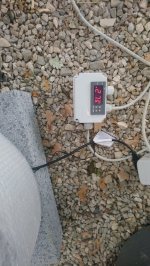
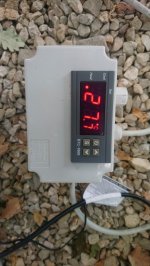
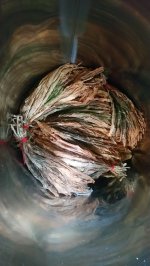
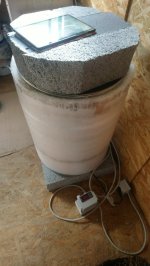
Ok Bob, my kiln is now built and tested, the first priming fully cured so I took it down from the curing barn - only needed to case it lightly as the ambient rh this morning was a perfect 75% - unstrung it and tied it into hands of 25 and now its in the kilning barrel, with a rh of 79 and temp currently at 40c, with my controller set to take it up to 45c. I want to ease it up to 50c gently over the next couple of days as I want to make certain not to exceed 52 or so, so as not to neutralise the enzymes. The first priming, mostly volado with some seco came to a harvest weight of 11.5kg, about 300 leaves. Now after curing they weighed 2.25kg, so 20% of original mass. The barrel is not even half full so I'll be able to add the next priming, all seco, when I'm satisfied with it's curing status. I have a great climate here for curing and the process is coming along very well. I think that 2nd one will be ready for fermentation in a week or so.
 
Joined
Jul 23, 2026
Messages
15
Points
3
Location
China
Well jeez, that's such a nice, simple to follow regime. Thanks so much. Very easy for me to achieve especially as it means I can do all the priming together or worst case in two separate s/steel cans as I will be processing about 70 hands and have one 50 and one 100 litre can. Presumably I will need to unpack, air out and if necessary recase every couple of days?
Great setup! The stainless steel barrel approach is actually really practical for small to medium scale operations — I've seen similar logic used in compact fermentation units from Chinese manufacturers, where they use sealed stainless steel chambers with temperature/humidity control and built-in air circulation.

On your question about opening and airing out: it depends a bit on how you're controlling the environment inside the barrels. If you have good temperature and humidity control with some air circulation, you might not need to open them as frequently. But if the barrels are just sealed without active ventilation, opening every couple of days to check on things and let fresh air in can help prevent mold and ensure even fermentation.

A few things I've found helpful:
- Monitor the temperature at different points in the barrel (center vs. edges) — even distribution is key
- Keep an eye on humidity — too high can lead to mold, too low can slow fermentation
- If you notice any off smells or condensation buildup, that's usually a sign to air things out
- Some people find that gently rearranging the hands when you open helps with even fermentation

Since you have solar power, you might even consider adding a small circulating fan inside the barrels to keep the air moving — that can reduce how often you need to open them.

What temperature range are you targeting for the fermentation, and how are you currently monitoring the conditions inside the barrels?
 

UmbriaFarmer

Member
Joined
Feb 18, 2026
Messages
22
Points
13
Location
Umbria Italy
Great setup! The stainless steel barrel approach is actually really practical for small to medium scale operations — I've seen similar logic used in compact fermentation units from Chinese manufacturers, where they use sealed stainless steel chambers with temperature/humidity control and built-in air circulation.

On your question about opening and airing out: it depends a bit on how you're controlling the environment inside the barrels. If you have good temperature and humidity control with some air circulation, you might not need to open them as frequently. But if the barrels are just sealed without active ventilation, opening every couple of days to check on things and let fresh air in can help prevent mold and ensure even fermentation.

A few things I've found helpful:
- Monitor the temperature at different points in the barrel (center vs. edges) — even distribution is key
- Keep an eye on humidity — too high can lead to mold, too low can slow fermentation
- If you notice any off smells or condensation buildup, that's usually a sign to air things out
- Some people find that gently rearranging the hands when you open helps with even fermentation

Since you have solar power, you might even consider adding a small circulating fan inside the barrels to keep the air moving — that can reduce how often you need to open them.

What temperature range are you targeting for the fermentation, and how are you currently monitoring the conditions inside the barrels?
Firstly, thanks for your engagement- much appreciated. As part of my career as a mechanical engineer, I spent 25 years in the beer brewing business and designed and built many bulk liquid process control systems, so I've got a decent idea of what the pitfalls could be here. So to answer your question about monitor the conditions, I attached the probe (a thermistor) for the digital controller to the inside wall of the barrel. I did that to make sure that the walls never exceed 50°C as I don't want to damage the enzyme activity of the leaf that is lying hard up against the walls. Then to monitor the temp in the middle of the hands, I've placed a Govee Bluetooth temp/rh transmitter which sends the data to my phone. Very useful graph function too so it's very easy at a glance in what direction, if any, things are heading. Thus on the temperature controller I can see immediately the vessel wall temp and on the phone I can see the internal pile temp and humidity. I want to slowly creep it up to an internal temp of 50, that's my aim for fermentation temp as at 50 I believe I avoid any risk of mold plus I'm getting the process completely as quickly as reasonably possible.
I don't think there will be much point in installing any air movement mechanism because very soon I'll be adding the 2nd priming of about 500 leaves, thus 25 hands, and it will be more or less full, so air circulation will become moot. I will see how often I'll need to open up, air out and move hands around but probs every couple of days or so. Also I feel it's likely that as the aerobic microorganisms consume the available oxygen, then the balance will start to shift towards anaerobic activity for maybe a day or so, reverting to aerobic when I air out. I see this as no bad thing as in past years I have produced some superb pipe tobacco blends using bright and dark tobaccos fermented entirely anaerobically.
To achieve stable conditions for that process, I built a 200 litre water bath to maintain a really nice stable 45°C environment. The very damp tobacco was packed into 10 litre glass jars, sealed and held submerged in the hot water. This was beautifully controllable and could repeat results time after time. I considered doing the same system for this cigar leaf but the daily airing out requirement makes the water immersion less appealing plus the insulation efficiency issues with 200 l of water are more of a pain in the bum. Will keep you posted with progress.
 
Top