
skychaser
Well-Known Member
I forgot the /s tag there. I was calling those small. harharThose small ones are kind of a pain to string up but still well worth the effort.

I forgot the /s tag there. I was calling those small. harharThose small ones are kind of a pain to string up but still well worth the effort.

No, I got the joke. That was my rebuttal. That my gifted gardening hand has never touched an inferior sized leaf so I will have to take your word for it…nudge nudge, wink wink!!I forgot the /s tag there. I was calling those small. harhar
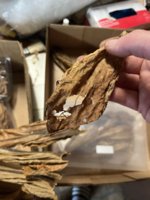

I have sometimes harvested sucker leaf. With a few exceptions (like Prilep), sucker leaf is of lower quality than the primary leaf, and usually is forced to color-cure under less than optimal weather conditions. Leaf that has frozen in the field is usually worthless.generally just let it rot in the field
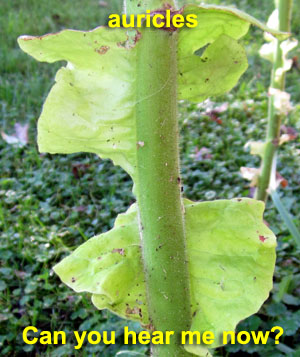
Funny you mention auricles. I was just thinking about how much leaf is left behind with them and if it would be worth the extra effort of carefully priming to include the auricles. Likely not. Yes, it seems like I will get a good second harvest from both Krumovgrad and Prilep!I have sometimes harvested sucker leaf. With a few exceptions (like Prilep), sucker leaf is of lower quality than the primary leaf, and usually is forced to color-cure under less than optimal weather conditions. Leaf that has frozen in the field is usually worthless.
Sucker leaf that matures, and successfully color-cures, can be okay leaf for various uses. Just weigh the added effort involved against your need for additional, mediocre (at best) leaf.
One year, I stared covetously at the leaf auricles remaining on my standing tobacco stalks, after the leaf had been primed. I tore the auricles off of scores of stalks of various varieties, filling a 1 gallon bag. I allowed them to finish color curing, then kilned them. Unimpressive. I cooked some into Cavendish. It was okay.
My point is that there is a balance point (decided by you) of additional effort vs additional benefit. I currently abandon the trash leaf at the bottom of my stalks, and don't bother with most sucker leaf. (Some Orientals sucker prolifically, and produce sucker leaf indistinguishable from the primary leaf.)
Bob
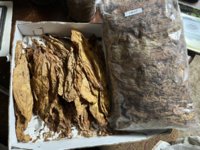


So, my observations at 3 weeks into my first load in my kiln (cycling between 123°F and 128°F) are: most of the burley/MD type tobacco is much better than the fully cured unaged version that went into the kiln but still has some rough edges (a little harshness and a hint of the unaged aftertaste). The orientals are phenomenal (Krumovgrad and Prilep). Whether the remaining 1 week and rest period will take care of the lingering undesirable traits remains to be seen though I remain skeptical. I have to remind myself that the alternative method of aging is at very least 12 times longer and introduces an array of less than attractive variables!From a chronological standpoint, my posts on a subject begin with my baby steps in exploring a new process, and evolve over years of experimentation.
One month pretty much gets the job done—but only if the temp and leaf moisture remain optimal continuously. Since I kiln hanging leaf as well as large open bags of leaf, this exacted a lot of stress on me. The Crockpot refill interval is dependent mostly on the ambient temperature at the kiln location, and that ambient temp cycles every 24 hours, and can change radically over short periods of time. My enclosed back porch has a non-insulated, wood floor. So on bitterly cold nights, the drip trays beneath the corners of the kiln will freeze. The temp controller maintains the proper temp, but at the cost of cycling the Crockpot on more frequently and for longer. This increases the rate of water evaporation from the Crockpot. So my refill interval varied between 2 days and 5 days. I would freak out when I discovered the Crockpot and leaf completely dry. How much extra time is required to make up for the vaguely known dry time?
During those runs in the winter, the leaf would sometimes finish a month still needing more kilning. To eliminate all the stress of running the kiln, regardless of the weather, and regardless of leaf varieties, I decided to simply allow each run to continue for two months. [You can't kiln too much.] Occasionally the Crockpot runs dry between refills, but I now don't care.
So, if you kiln leaf that is pre-moistened, and tightly sealed within its container, then 1 month may be sufficient for many varieties. If it doesn't stress your brain to babysit the kiln conditions, then 1 month may be fine as well
Keep in mind that the vast majority of leaf that goes into my kiln has already aged for about a year in the shed. Certain varieties of my leaf (e.g. Olor and Piloto Cubano) still need months of additional rest after a year in the shed and 2 months in the kiln. Bolivia Criollo Black needed all that plus several additional years of being ignored, before I found it inviting.
Trying it both ways (1 month vs 2 months) for a comparison of your results might be worthwhile, though the two batches will be different pre and post kilning ages when you compare them.
Bob
Thank you. Testing is my intention I just needed slight guidance.The shortest rest is just a few days (e,g, burley), whereas other varieties require weeks or even months. You'll just have to give it a try at various intervals.
Bob
So you have grown and, I assume, kilned MD 609 before. What was your experience with it out of the kiln?The shortest rest is just a few days (e,g, burley), whereas other varieties require weeks or even months. You'll just have to give it a try at various intervals.
Bob


We discuss any variety of tobacco, as well as numerous approaches to growing, harvesting, curing, and finishing your crop. Our members will attempt to provide experience-based answers to your questions.