Webb Telescope Launch

Status
Not open for further replies.

GreenDragon

Moderator
Joined
Jan 18, 2018
Messages
2,148
Points
113
Location
Charlotte, NC
i heard expected lifespan go upped again too.
does anyone here have a telescope? i recently got an 8" dobsonian and in quite fun in the bit i got to use it so far.

I have an 8" Dob and an 8" Celestron Cassegrain Nexstar. Guess which one I use the most? Yep, the Dob. Invest in good eyepieces, you will be rewarded. Highly recommend Teleview. The wider the field of view, the better. Have fun!!!

The expected useful lifespan has been increased from the original 10 years to now 20 years due to the efficiency of the launch rocket and the accuracy of the trajectory. Professional astronomers around the world are celebrating.
 

skychaser

Well-Known Member
Joined
Aug 30, 2012
Messages
1,117
Points
113
Location
NE Washington
Your new telescope will long outlast the Webb. @skychaser just might have a telescope.

Bob
um..yah I might have one or two.......or six.

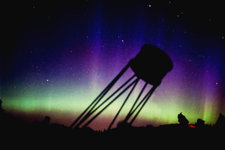
3" refractor, 8" Celestron Cassegrain, 10" Coulter Dobsonian reflector (the one I let kids play with) 2-10" truss tube dobs built 100% by me, including the mirrors, 17" truss tube dob built 100% by me including the mirror (this one won some awards) and a 21.25" mirror I made still waiting for a telescope to be built around it. Also have a camera tracking platform, twin Minolta X 700 cameras and a host of eyepieces, filters and other accessories.

If only I could get my buddy Elon to launch one. Damn pesky atmosphere is in my way of a really good view. /sigh
 

Attachments

  • 17inch-dob.jpg
    17inch-dob.jpg
    45.2 KB · Views: 11
Last edited:

skychaser

Well-Known Member
Joined
Aug 30, 2012
Messages
1,117
Points
113
Location
NE Washington
@billy Get these books. You won't regret it. https://www.amazon.com/Finder-charts-Messier-objects-set/dp/B0006S18Y8
"These finder charts break the sky down into tiny parts and include a Telrad target printed on the page. You simply match your Telrad target to the picture of the sky and you can find the object,"

And if you don't have a Telrad finder get one of those too. They are awesome and super easy to use.
When you finish the Messier objects you can start on the NGC list. That will keep you busy for a while. :)
 

billy

Well-Known Member
Joined
Mar 29, 2021
Messages
182
Points
93
Location
usa
@billy Get these books. You won't regret it.
i just use the stellarium app on my tablet for virtual skybox of where things are. then i made a base that goes under my base with degree markings so i can tell rotation, and stick magnetic angle finder on the tube for vertical angle. so i can pick and point at something fairly quick.
And if you don't have a Telrad finder get one of those too.
view finder i dont know if i want something 1x power or not yet. i can take a red dot off something else and stick it on to see how i like it sometime later. my winter is 1% chance of no clouds so i cant test things often now.

but since you understand dob's well im gonna personal message you a question so i dont hijack the thread into a help me
 

deluxestogie

Administrator
Staff member
Joined
May 25, 2011
Messages
26,087
Points
113
Location
near Blacksburg, VA
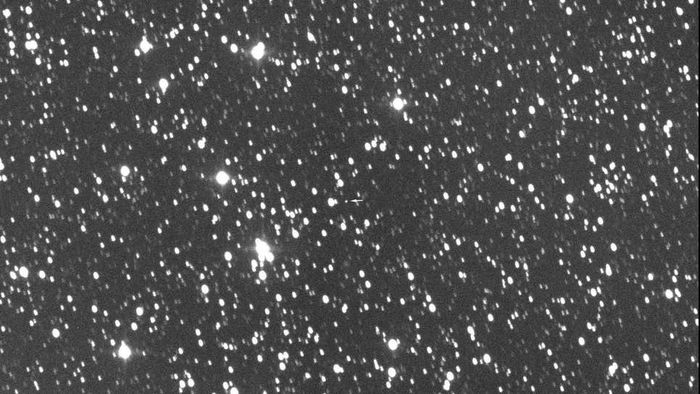
Where's Waldo? This is an image of the Webb telescope in its parking spot.

WebbInParkingSpot.jpg


Bob
 

deluxestogie

Administrator
Staff member
Joined
May 25, 2011
Messages
26,087
Points
113
Location
near Blacksburg, VA
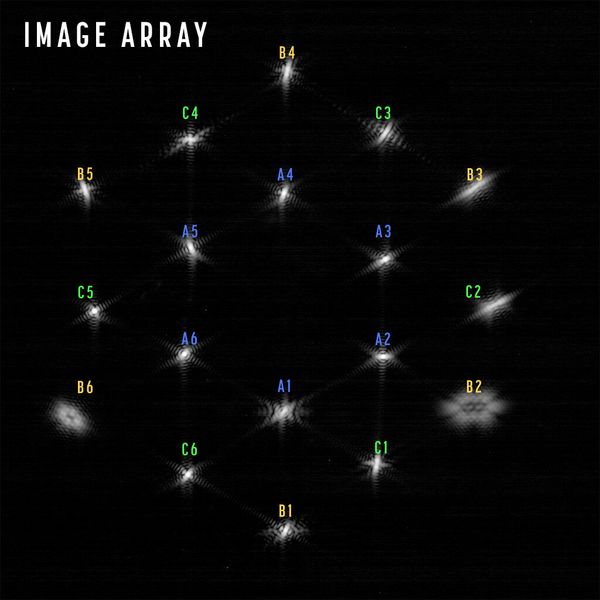
webb-18-dots_20220219.jpg


Each dot is the image from one of the 18 primary mirrors. They are arranged into the relative positions of the primary mirrors themselves. The blurriness indicates the required movement (closer or farther away from the secondary mirror) still needed to focus that particular primary mirror. Now each dot will be focused and gradually superimposed into a single dot at the center.

Bob
 

deluxestogie

Administrator
Staff member
Joined
May 25, 2011
Messages
26,087
Points
113
Location
near Blacksburg, VA
"China claims that a piece of distant space debris that’s about to slam into the Moon does not stem from one of the nation’s lunar missions, as astronomers tracking the object believe. However, it’s possible that China may have mixed up which mission the debris originally came from, as most evidence points to it being an old Chinese rocket."


I didn't do it! He did it!
 

Knucklehead

Moderator
Founding Member
Joined
Oct 18, 2012
Messages
12,777
Points
113
Location
NE Alabama
"China claims that a piece of distant space debris that’s about to slam into the Moon does not stem from one of the nation’s lunar missions, as astronomers tracking the object believe. However, it’s possible that China may have mixed up which mission the debris originally came from, as most evidence points to it being an old Chinese rocket."


I didn't do it! He did it!
"It wasn't me."

View: https://www.youtube.com/watch?v=wbAF1EExpek
 

deluxestogie

Administrator
Staff member
Joined
May 25, 2011
Messages
26,087
Points
113
Location
near Blacksburg, VA
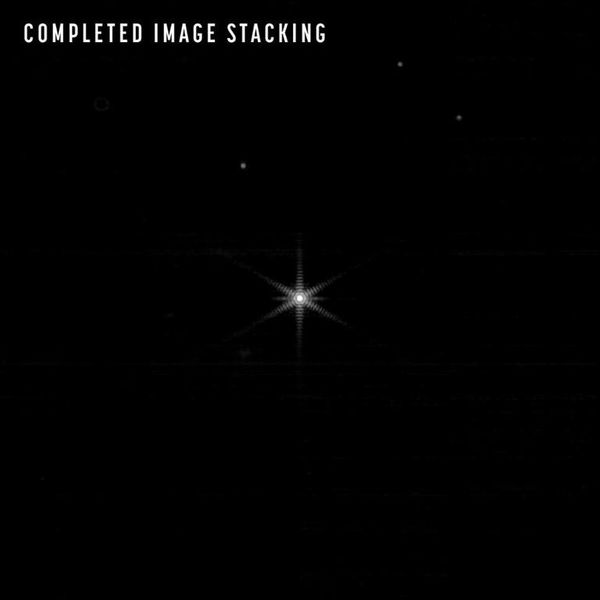
"Although Image Stacking put all the light from a star in one place on NIRCam’s detector, the mirror segments are still acting as 18 small telescopes rather than one big one. The segments now need to be lined up to each other with an accuracy smaller than the wavelength of the light."
[nasa.gov]

"Infrared radiation (IR), also known as thermal radiation, is that band in the electromagnetic radiation spectrum with wavelengths above red visible light between 780 nm and 1 mm. IR is categorized as IR-A (780 nm-1.4 µm), IR-B (1.4-3 µm) and IR-C, also known as far-IR (3 µm-1 mm)."
[icnrp.org]

Hmmm. Nanometers to millimeters? So "smaller than the wavelength of the light" (which is specifically infra-red) seems to have a range of 0.00078 millimeter to 1.0 millimeter. That's not very specific. The accuracy at the short end is over a thousand times more accurate than at the longer end of the wavelength band.

Bob
 

GreenDragon

Moderator
Joined
Jan 18, 2018
Messages
2,148
Points
113
Location
Charlotte, NC
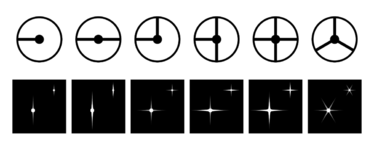
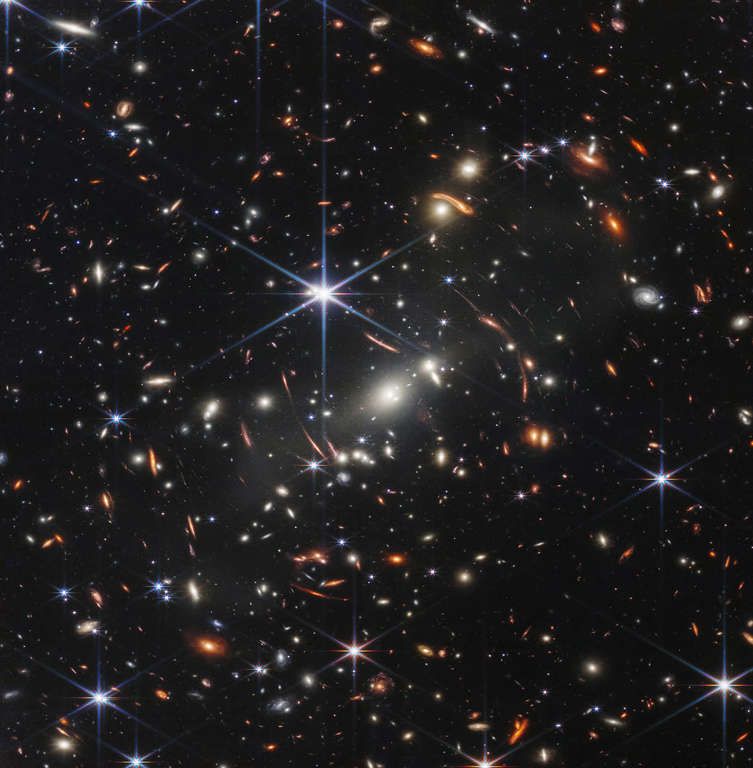
Ever wonder why some images of space have rays forming crosses over each star and some have none? It's due to the way the secondary mirror is mounted in reflection style telescopes. The mounts for a diffraction pattern from light glinting off the surface of the vanes.

diffraction_spikes.png

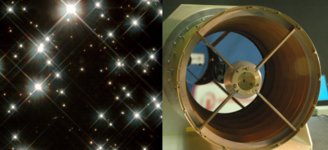
For example, the Hubble has a four vane configuration, and you can see the classic "cross" pattern in it's images.

stars_spikes.jpg

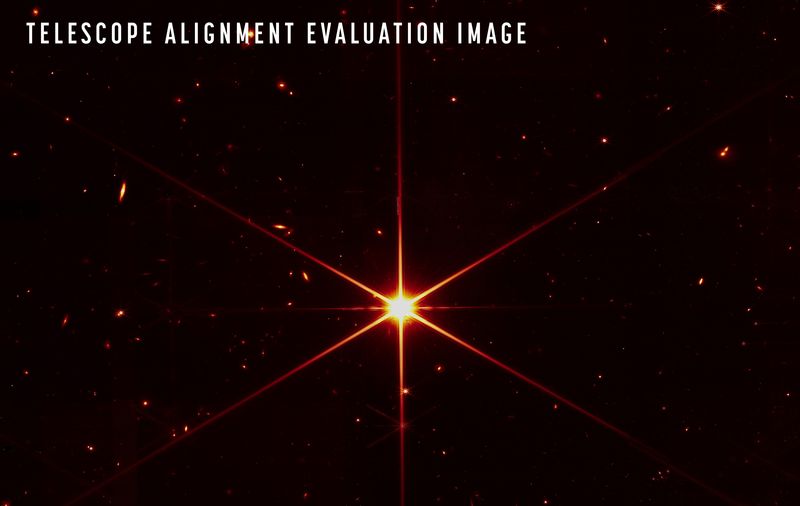
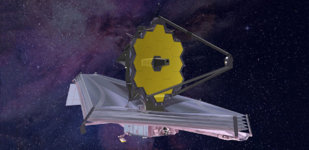
The James Webb telescope has 3 vanes, so you get a 6 rayed pattern.

JWT.jpg

Scopes that do not use mirrors but lenses, or reflector telescopes that use glass to hold the secondary, do not have these spike patterns.
 

deluxestogie

Administrator
Staff member
Joined
May 25, 2011
Messages
26,087
Points
113
Location
near Blacksburg, VA
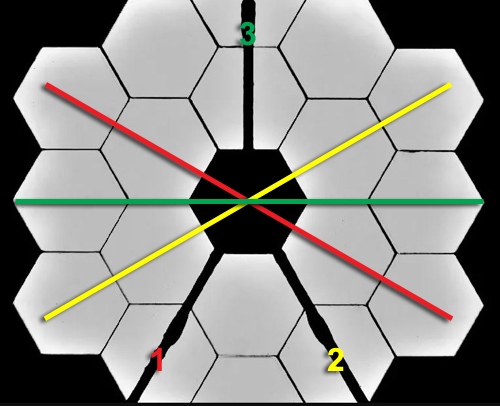
Webb_mirrorRefractiveSpikes.JPG


The refractive spikes always emerge from the center of the mirror, in both directions, at 90° from the support arm that creates it. Any arms that are at 45° or 90° to one another create refractive spikes that overlay one another, as with drawings 1,2,3,4,5 in @GreenDragon's illustration. Any mirror with 3 arms, none of which are 45° or 90° to one another (like Webb) form 3 independent spikes.

Bob
 

ChinaVoodoo

Moderator
Joined
Sep 1, 2014
Messages
7,220
Points
113
Location
Edmonton, AB, CA
Status
Not open for further replies.
Top