Wombat's 2026 Grow Log

Wombat_smokes

Well-Known Member
Joined
Jul 7, 2025
Messages
106
Points
63
Location
Utah
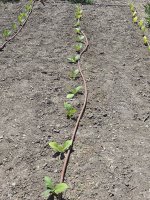
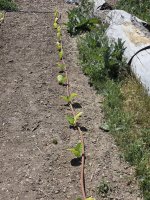
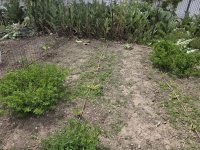
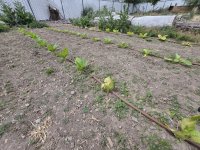
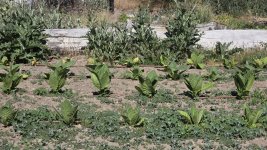
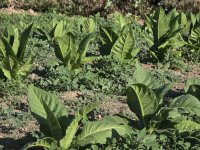
Last Sunday (May 2), I planted Shargo, Frog Eye Orinoco, Trabzon #2, and Yellow Pryor. Al at 18 inch spacing, 16 plants each. All are doing very well.

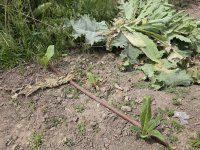
My "dead" One Sucker and Little Dutch are showing sign of survival. Some growth tips appear to be intact. Others are undoubtedly putting out suckers. The Tofta had all growth tips killed, but some stems are suckering. The same goes for Prilep and Bursa; some plants dead, all growth tips dead, all survivors growing suckers. Does anyone allow their Prelip or Bursa sucker?

My paper bad curing is progressing nicely. Single layers of leaves in newspaper is less hassle and allows the color curing to happen with out daily turning or worries regarding moisture levels (Åhus is maintaining low-medium case while Trabzon#2.is coloring nicely). The brown paper bags are thick enough to take on/trap moisture. Good for curing, but not as good for drying; do-able, but temperamental on moisture.

I'm happy I'm "waisting" my time of these bed/trash leaves. I'm learning what the color progression looks like, when to move from coloring to drying stages, and what mold looks like in its early stages.

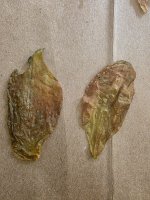
Some examples of NOT mold for my fellow first timers

1192.jpg

These spots are irregularities in the leaf. Mold wipes off and has the tell tale circular, fuzzy look. These spots are IN the leaf, and look like mineral stains on a drinking glass. The accentuated white spots on the left specimen might also be clumps of leaf hairs.

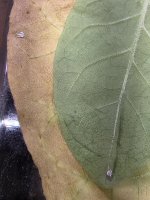
1191.jpg

The above green blotch is also part of the leaf and an abnormality. Often attributed as an artifact for fertilizer timing and levels (if I correctly remember other people's answers to the same question). Bad for commercial production, but nothing to worry about.

1189.jpg

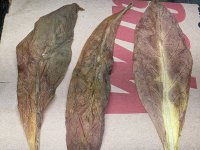
These brightleaf specimens are a great example of when to transition from color curing to drying in a flue/kiln chamber. However, as I am air curing in paper bags & newspaper, they will stay in their pilones until brown or mostly brown.

1190.jpg
These Bursa leaves have gone from, "I don't think anything will come of these" green to a lovely brown. The Åhus also continues to go from light claro brown to deeper shades.

Remeber... it's a process, you're learning, it's ok to try and fail; and seeds are your greatest triumph as a first time grower. Most importantly, enjoy the process and have fun!
 

OrlandoJoe

Member
Joined
Apr 25, 2026
Messages
17
Points
3
Location
Florida
Time to begin my first growing season & Grow Log. Seeds are on order at Northwoodseeds.com

But first, a little back story. I learned about the FTT forums when I stumbled upon WLT. I then learned Utah state laws forbid mail ordering tobacco. That includes internet sales & paying by phone. Utah also has an 86% wholesale tax on premium tobacco. That means the purchase price is instantly doubled on any premium tobacco products. That includes whole leaf if a local shop was to provide it.

As a result, I decided to save myself some money and make it myself. For half the cost of a pound of pipe tobacco, I can be set for life - provided I remain vigilant.

By the numbers, my extra garden space is able to provide 5 kg of dried leaf depending on varieties and final curing success. I'm looking at an extremely ambitious 261 plants plus my normal veggies.

The list:

Brightleaf
Frog Eye Orinoco
Yellow Pryor
Trabzon #2

Air Cured
Semois
Shargo
Small Stalk Black Mammoth
Little Dutch
One Sucker
Tofta
Ahus

Orientals
Bitlis
Malatya
Anatolian
Yayladag
Trabzon
Ege
Duzce
Bursa
Prelip
Herzegovina Flor

As always, comments about personal experience & opinions regarding these varieties are welcome.
Thats fascinating, does pipe tobacco not age out like cigar tobacco?
 

Wombat_smokes

Well-Known Member
Joined
Jul 7, 2025
Messages
106
Points
63
Location
Utah
Thats fascinating, does pipe tobacco not age out like cigar tobacco?
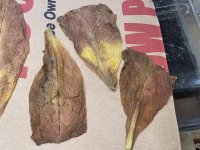
I'm not sure by what you mean by "age out". However, all tobacco ages. As time passes, tobacco in proper case (moisture level) will develop it's ultimate flavor potential. The longer the better (in some people's opinion). Each variety and family have unique flavors. "Cigar" types simply have a different flavor than "pipe" types.

Using a kiln accelerates and maintains the aging process. You can read about the process in various threads including those marked in the FAQ's and Key Forums.

To sum up:
The warmer you keep the tobacco, the quicker the aging process occurs. Color change happens below 125°F/50°C; flavor change, below 190°F/88°C. Kiln aging at 125°F for 4 weeks will take yellow/light brown leaf to darker colors.
 

Wombat_smokes

Well-Known Member
Joined
Jul 7, 2025
Messages
106
Points
63
Location
Utah
Welcome back friends! It's time for everyone's favorite game..... IS IT MOLD!!!!

Before we get started, here's a little story about our guest's leaves.....

Guest:
I left town for 4 days to celebrate my friend and I's birthdays (we both have May birthdays). My box curing leaves were left unattended for that whole time. The weather got very warm, so the temperature and humidity in my curing space (a shed) was between 80°F - 100°F and a RH of 40% - 60%.

Host:
Thank you for the introduction friend. For those of you playing at home, fell free ro write down your answers as you look closely at our samples. The variety of the leaves are unimportant as mold will develop on all tobacco leaves under the right conditions.

Here is our first sample.
1193.jpg

Is it mold?
If you guessed, Yes, you are correct! Note the gray/white circular patches and how some areas have begun to spread.

Sample #2
1194.jpg

So.... is it mold? For all of playing at home, fell free to zoom in and look very close.
Answer: Yes!
Again, note the fuzzy gray/white areas.

A little tip for testing when you're not sure, use a 1:1 mixture of Hydrogen Peroxide and water to either spritz or dab at the suspected areas. If there are fizzy bubbles, it's mold. If nothing happens, it's not.

Now it's time for a little bonus round we like to call, "will it cure/Is it green?"
Leaves that dry green are not capable of color curing as the leaf MUST be kept "alive" by maintaining a sort of suspended animation under proper moisture levels. Ambient temperature is not as important as moisture present in the leaves. Sometimes, our leaves will color cure, but retain a certain green hue. These leaves, however, are often able to be rehydrated and placed a kiln at 125°F to remove that green hue and "brown up" to create an enjoyable product.

Here is our first sample.
1195.jpg

Is it green and will it cure?
Yes, they are green; no they will not cure. These leaves all dried green. They were stubborn to cure in their box pilones. Some started to change color, but they were simple too mature to properly color cure.

Or next and final sample.
1196.jpg

Is it green; will it cure? As you can see, there is a lot of green and some have browned, but can they be color cured in the kiln?

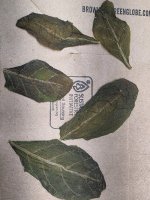
No. Acording to our judges, they will not cure. You're welcome to try and gain some experience in leaves that will and won't cure, but these leaves don't have enough "life" to become a productive product.

Well, friends, that concludes today's challenge. Thank you for playing. Remember, tobacco curing takes constant vigilance and patience to identify mold while there's time time to correct and remedy the situation. Leaves that dry green, are useless. Have fun with your growing and curing. Stay curious, try new things, and have fun with the process. Good night, and we'll see you next time on.... IS IT MOLD!!!
 

Wombat_smokes

Well-Known Member
Joined
Jul 7, 2025
Messages
106
Points
63
Location
Utah
WTF, Mate!
1211.jpg
Hitch hikers
1205.jpg

Aphids! The little ankle biters must've caught a ride leaves while plants were sunbathing. These leaves were in a curing bag labeled "Turkish Crazy Mix" - assorted Turkish leaves with some Small Stalk Black Mammoth & Semois from my back up tray.

Be thou ever vigilant!
 

Wombat_smokes

Well-Known Member
Joined
Jul 7, 2025
Messages
106
Points
63
Location
Utah
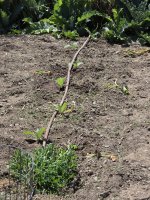
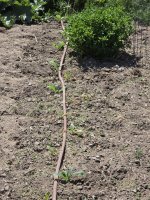
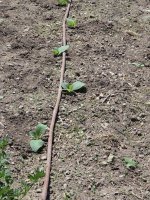
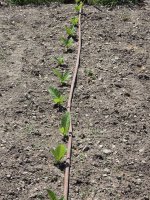
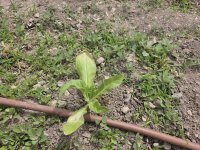
On a happier note; yesterday, I planted 15 Semois and 8 Small Stalk Black Mammoth. I also replaced 8 One Sucker and 8 Little Dutch.
Pictures: little dutch
1204.jpg

One Sucker
1203.jpg

Small Stalk Black Mammoth
1202.jpg

Semois
1201.jpg

Yellow Pryor
1200.jpg

Trabzon #2
1199.jpg

Frog Eye Orinoco
1198.jpg

Shargo
1197.jpg

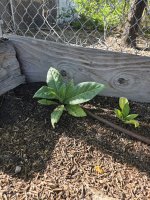
Everything is looking good. I was impressed that all of my One Sucker groth tip survived the April freeze. I replace the runts and not so pretty plants. I also let alphalpha grow as a cover crop, Mulch source, and nitrogen fiber. The whistles will be removed. While thistle is an (ob)noxious weed, it is both a trap crop and source for aphids. The beneficial insects (ladybugs, praying mantis, and various wasps) seem to be in an ecological balance, so the aphids are never truly suppressed. However, I haven't seen hornworms on my tomatoes for the past 3-5 years, so my parasitic wasp population must be doing their job. We'll see if my tobacco "brings the boys to the yard"
 

Bamabaccy8a

Active Member
Joined
Mar 31, 2026
Messages
39
Points
18
Location
North Alabama
On a happier note; yesterday, I planted 15 Semois and 8 Small Stalk Black Mammoth. I also replaced 8 One Sucker and 8 Little Dutch.
Pictures: little dutch
View attachment 59578

One Sucker
View attachment 59579

Small Stalk Black Mammoth
View attachment 59580

Semois
View attachment 59581

Yellow Pryor
View attachment 59582

Trabzon #2
View attachment 59583

Frog Eye Orinoco
View attachment 59584

Shargo
View attachment 59585

Everything is looking good. I was impressed that all of my One Sucker groth tip survived the April freeze. I replace the runts and not so pretty plants. I also let alphalpha grow as a cover crop, Mulch source, and nitrogen fiber. The whistles will be removed. While thistle is an (ob)noxious weed, it is both a trap crop and source for aphids. The beneficial insects (ladybugs, praying mantis, and various wasps) seem to be in an ecological balance, so the aphids are never truly suppressed. However, I haven't seen hornworms on my tomatoes for the past 3-5 years, so my parasitic wasp population must be doing their job. We'll see if my tobacco "brings the boys to the yard"
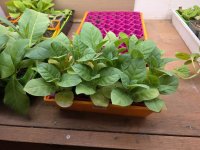
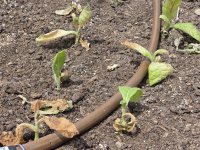
Are those homemade drip hoses, aka they leak anyway...? Im looking to go drip on my garden . Its usually windy up on our mountain. Seems i water more than my crops. I have a couple rolls of 1/2" rainbird black supply line. Thinking about attacking them with a 1/16" drill bit and string it through the rows.
 

Wombat_smokes

Well-Known Member
Joined
Jul 7, 2025
Messages
106
Points
63
Location
Utah
I use the 1/2 drip tubing from Home Depot. Most of the compression fittings don't leak... much. It's been working great for me. My oldest line is about 10 years old and still working good. I use the black supply line as a cut to length water hose for the drip lines.

I just finished my drip line for my Orientals. I had an old fitting that failed. After replacing the fitting, everything's perfect.
 

Wombat_smokes

Well-Known Member
Joined
Jul 7, 2025
Messages
106
Points
63
Location
Utah
Plants put in the ground today:

29 Yaladag @ 4-6 in
21 Malatya @ 4-6 in
19 Anatolian @ 4-6 in
8 Herzegovina Flor @ 12 in
15 Ege @ 6-12 in
21 Trabzon @ 6-12 in

I also started my 2nd crop of One Sucker and Herzegovina Flor. Yes, I'm making a lot of work for myself, but I'm curious how far I can push my growing season while maximizing yeild - rookie mistake, I know.
 

Wombat_smokes

Well-Known Member
Joined
Jul 7, 2025
Messages
106
Points
63
Location
Utah
As I look through & rotate my bag curing leaves, I notice that 5 layers is the best for curing. Anything Thicker than that is prone to moisture build up & mold.

My 2nd crop of Åhus is 5 weeks old & looking good. They're ready to plant and have had no haircuts. Their short maturation/time to harvest truly means they should have haircuts because you'll be trimming harvestable leaves.
1235.jpg

The Düzce has also had no haircuts. The size of the 72 cell tray is small enough to keep them compact, plus I haven't fertilized them except to provide extra nutrients in preparation for transplanting.
1236.jpg

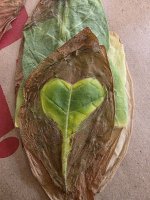
Her is a look at a rare and divine curing pattern from my Yellow Pryor. While the name of this brightleaf is a reference to it's early maturation compare to other brightleaf, I can't help reflecting on the religious meaning of Pryor.
1234.jpg
 
Top