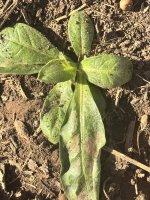
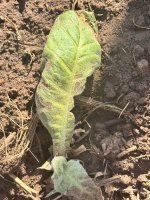
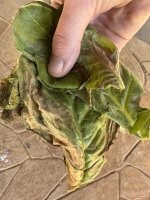
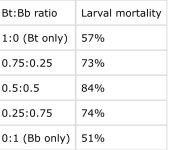
You may wish to investigate the question of possible interaction or interference between your different biologicals.
Bob
Bob

Good evening Sir,You may wish to investigate the question of possible interaction or interference between your different biologicals.
Bob

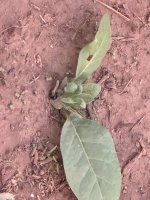
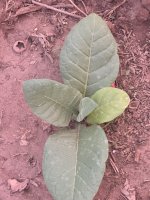
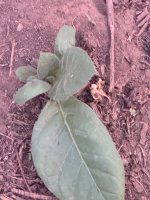
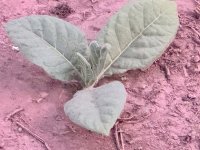
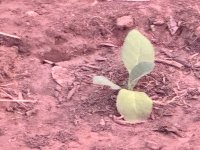
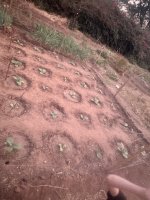
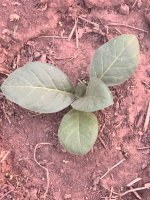
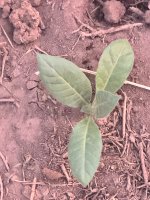
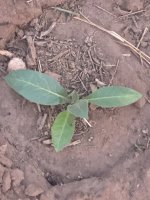
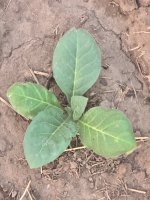

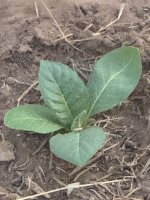
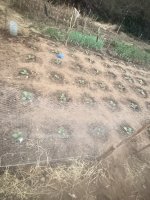
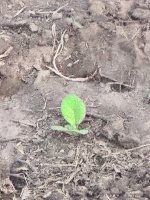
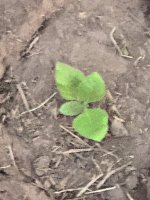
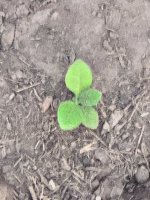
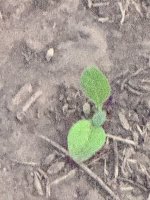

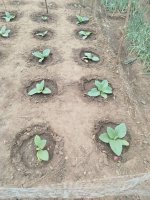
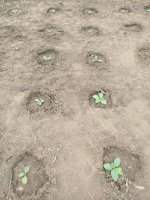
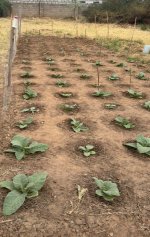
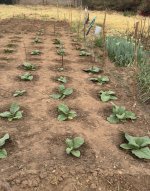
Just a tip I have done before as the plants gain some height you can still add a mound for runoff just compact it nice and firm around the stalk.Garden walk update, took photos of smaller and larger plants. Overall I am happy. They didn’t receive water today and no wilting occurred at 32°C.
Broadleaf bed 1,
View attachment 61123View attachment 61124View attachment 61125View attachment 61126View attachment 61127View attachment 61128
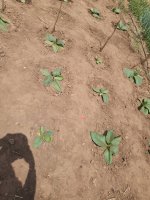
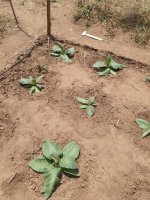
Mixed plant bed, starting to see broader vs sharper leafs. The rounder leafs are burley and Eastern Cape Virginia and the sharper leafs are Old Zimbabwean Virginia. I am not 100% sure, I was away when they were transplanted so just need to map and table that bed.
The lush green plant in photo 6 is a Mapacho plant.
. View attachment 61129View attachment 61130View attachment 61131View attachment 61132View attachment 61133View attachment 61134View attachment 61135
Broadleaf bed 2,
View attachment 61136View attachment 61137View attachment 61138View attachment 61139
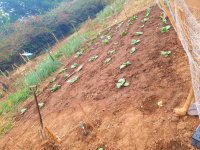
Note for next year, when doing beds, plant on mounds, not basins. They work nicely now, but when the rain comes it can cause water build up and fungal pressure. I am going to see if I can figure out a gutter system. At that stage plants will be bigger and I can make a plan. Pretty silly oversight.
Tomorrow broadleaf field 1 will get an application of 8g LAN and 1g MAP per plant. Will be sprinkled in the basin about 10-15cm from the stem in the evening and then watered deeply, but without runoff. Measuring jug watered at 1.5 liters per plant 1 to 30 and then start at plant 1 again with another 1.5 liters. Marcros for this application is 35kg N/hectare and 3.5kg P/hectare. This is the last phosphate that this plant will receive.
Broadleaf field 2 is getting their first post transplant fertiliser application. Will get 2g of soluble 6:1:3 diluted into 2 liters of water per plant. 8kg N/hectare, 1.3kg P/hectare and 4kg K/hectare.

I will definitely look into that, I have about 2 months before the heavy rains start. At that stage I should have nice strong plants with enough stem and sacrificial leaf to make it work. I was planning an overcomplicated guitar system that isn’t necessary.Just a tip I have done before as the plants gain some height you can still add a mound for runoff just compact it nice and firm around the stalk.

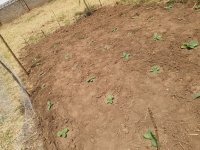
You could loosen up the soil a bit. I would recommend using a spade fork for doing so. You'll get deeper into the soil with one. I'm afraid a hard rake won't really get deep enough.
This is a: Spade fork
At the end of a growing season, I like to use a broad fork for turning/loosening the soil instead of using a tiller. This is also how I mix compost into the soil. I hate tillers and a broad fork requires no gasoline as it has no engine. This is a: Broad Fork
After forking the soil, then I use a hard rake to smooth out the surface.

In the left margin of the picture, it looks like you do have a spade fork. Of course, using a mattock is another way but that can be back breaking work.
Ime, using a spade fork and broad fork to loosen up soil is the least labor intensive work. Its still a lot of hard work; no way around that.
What I'd recommend now is a layer of mulch on top of the soil at least around the plants- sorta like the icing on the cake. Then I'd say you ought to be good to go, given enough rain.
The mulch can reduce the mud splatter than gets on your leaves and also helps hold moisture in the soil.

We discuss any variety of tobacco, as well as numerous approaches to growing, harvesting, curing, and finishing your crop. Our members will attempt to provide experience-based answers to your questions.