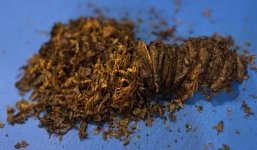
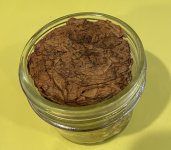
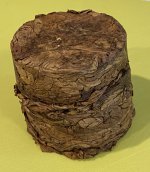
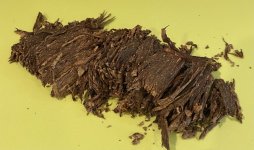
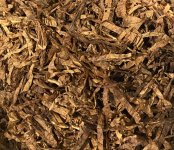
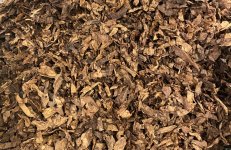
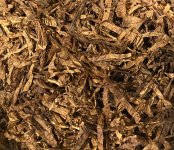
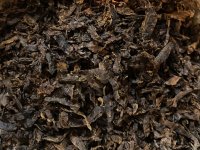
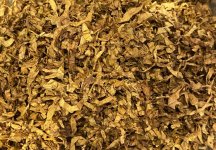
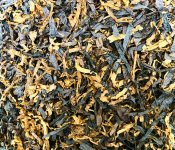
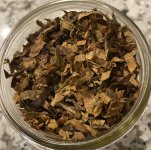
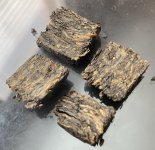
How I process my whole leaf

deluxestogie

Administrator
Staff member
Joined
May 25, 2011
Messages
26,575
Points
113
Location
near Blacksburg, VA
It is my understanding that ammonia doesn’t actually need to “gas off” but instead gets converted and not necessarily removed.
Tobacco does not contain ammonia that needs to gas-off. Ammonia is chemically created when the leaf's oxidizing enzymes break nitrogen moieties off of the proteins they are degrading.

Bob
 

Juxtaposer-

Well-Known Member
Joined
Jun 11, 2024
Messages
240
Points
93
Location
Las Vegas
Irish Cake will be three years old in November. It was tested to check that the licorice root brought balance to the bitterness. It certainly did and the inverted sugars were noticed as well. Sour light fire cured, bitter earthy dark air cured both brought together and rounded out by red VA. Very high nicotine! The next time I smoke it I will be sure to withhold snuff and snus use beforehand.

Besuki Coin Wreckage is simply wonderful. The Perique and Besuki are amazing together. we’ll see how long I can stay away from the coins. I am a bit curios about the pennies having no centers.IMG_0446.jpeg
 

PvtPublic

Well-Known Member
Joined
Jan 20, 2026
Messages
83
Points
33
Location
Montana
Perhaps I've overlooked this, but do you (or anyone, I suppose) have a method for stoving under pressure?
 

PvtPublic

Well-Known Member
Joined
Jan 20, 2026
Messages
83
Points
33
Location
Montana
I don’t myself but many use pressure cookers. From what I have gathered it is a good way to make what one would call cavendish.
I guess I should rephrase that. I'd like to gently heat the tobacco in a press somehow. Perhaps ~120°F. I've made Cavendish a few times, and that's not quite the effect I'm looking for here. Maybe using a noodle press in a Ziploc on my dash this summer... even though that will get higher than 120.
 

Juxtaposer-

Well-Known Member
Joined
Jun 11, 2024
Messages
240
Points
93
Location
Las Vegas
I guess I should rephrase that. I'd like to gently heat the tobacco in a press somehow. Perhaps ~120°F. I've made Cavendish a few times, and that's not quite the effect I'm looking for here. Maybe using a noodle press in a Ziploc on my dash this summer... even though that will get higher than 120.
I have my noodle pressed plug screwed into a jar to be clenched by its lid. In this condition It can immediately be placed in an oven to preheat. I have gone as high as 200F for two hours. Higher temperatures should be managed with research. At 120F I would expect a cook time of four weeks. I have a few jars in an outdoor drawer that enjoy the warm weather here in the Mojave desert. On the dashboard is a common method. I do recommend protecting from sun exposure including the plastic and the metal if that is the hold container used. Mold growth is a concern for temperatures below say 125F. You may be interested in Kilning, or specifically, Jar Kilning. There is no adept information on kilning in this thread however this forum is full of experts and expert advice.
 

Juxtaposer-

Well-Known Member
Joined
Jun 11, 2024
Messages
240
Points
93
Location
Las Vegas
Checking in on the Basma that has been under water for five months now. I don’t know why it gets so messy above the screen. I am glad the stink doesn’t surface. I gave everything a thorough treatment. I sieved the cover water and put it aside to put back in. Forked out the silage put it in a bowl and set it out side. It is still stinky but there is a distinct fruitiness that holds a promise. Washed and sprayed with alcohol both the pot and plunger. I am tempted to let the tobacco dry out completely as its smell seems to improve while it is out of the water but this batch is testing the necessity of complete airing with this type of processing. I did add a bit of distilled water when it was put back together.

A bowl of 2XO2 with some Drowned PA.
This Virginia is pretty good showing itself wonderfully in the first ten minutes. Somewhat suddenly the bowl became spicy, bitter, woody, earthy, and nutty in the same order strength wise. I had obviously put too much PA in this. As the bowl progressed the VA poked through minimally with some impressive flavors. Mid bowl the ghost of St. Bruno showed up. Damn that tonquin. It smoked just fine through this and maintained a reasonable balance. With the nicotine levels being very high I considered putting the bowl down but the flue cured flavors had me doing a relight. Lots of tunneling going on so I really can’t tell how scary the ghosting is. A smaller percentage of PA would make an excellent mixture of these tobaccos. I better check the cake I already made with this special PA.

Honey Red 175 VA/PAper 12/25 is how the label reads. It is loosely caked and long thin strands of shag pull off easily. I believe I have only smoked this once before right after its jarring. I recall noting both tobaccos were still in need of rest. Good Red VA flavors soon after lighting up. Some balancing bitterness and a building spiciness. A little after the half way mark the PA overpowers the VA and at the same time the bowl is noticeably wet. At three quarters down the ash is dumped and the tobacco stirred. Without tamping, I let it dry and cool in the breeze for a few minutes. Subsequent relights very spicy and slightly woody with some dark fruit and nuttiness below. A few juicy hits off the wet dottle leave me pondering the addition of some of the double pressed VA (2XO2). This mixture has twenty percent of the Perique style processed PA binder and as it is that is a little much. Still young, not even six months, I will leave it to age.

It has become obvious that I did not leave the PA under water for long enough. Although it has been improved, the spiciness is overwhelming. It was still smelling of ammonia when it was taken out indicating that the process was working but not complete. Putting it back under water would be the best solution in order to follow through on the experiment. I could try casing it although I don’t know if that would deal with the spice. I will try it in smaller amounts with the 2XO2 to see if the VA/PAper can be fixed. Otherwise the PA is what needs to be fixed.


Picaroon Mixture test #2 has the VAs in good proportions. The DAC gets kicked for test #3.
Test #3 has the 16.67% Picaroon Cavendish showing much more clearly without the DAC. Within the first ten minutes it is already noticed and it gets stronger throughout the smoke. Hot dirty diesel wood is what it could be called. I will be testing it at around ten percent after a quick check on the VAs by themselves.

60% Honey Hibiscus
20% Lemongrass Lemon
20% Stoved Red Flakes

Test results yield a stand alone straight VA mixture. I will continue using it for testing Picaroon percentages however this may be a valuable pure flue cured mixture to have.

Testing with smaller amounts of Picaroon have me rethinking its use. It seems that it does need another stronger tobacco to balance it, perhaps Perique.


Concerns for mold have me airing the jars of coins as well as the pigtails. Simply leaving the jar lids off for a spell. Put pigtails outside for summering.

18 VA/BUR was and aged twist that was more Burley than Virginia. Kentucky Burley specifically. The recently added citric acid did help smooth it out a bit. My notes say decide on the addition of licorice root by January of 2027. Well, having smoked a bowl of this has me saying no, right away. Intending on preserving the pleasant bitterness it has I will be simply adding more flue cured to it to achieve a more balanced flavor profile.

‘18 VA Cut plug Osmanthus tested with a pinch of VA Cavendish seems a worthy addition. A pleasant smoke on its own the othmanthus is evident throughout the bowl. It can only be identified by the attributes it adds. It certainly certifies the stone fruit of the plug. The notification of any floral aspect in the flue cured is also brought up by the elusive othmanthus. A mild bitterness that plays with woody notes can also be found in this mixture.

The combination of these mixtures with one third being Cut Plug is tasty enough to be the final iteration. The Kentucky Burley stands up throughout. The Virginias inject their own interest. Enough to confirm that this is a certified VA/BUR. Nuts and fruit with a top note of the bitter poison C10H19N2. The occasional floral note reminds me of the desire to develop a nutty floral mixture.

Done deal… I used the noodle press to put this mixture back in the jar. Very light pressure but this will insure more even pressures within the jar and a lower likelihood of moisture pockets than thumb pressing.


The talk regarding kilning has me opening up to supply fresh air the jars of Cube Cur Burley and Cube Cut Maryland. They are humid enough to handle quite a bit of air time. I may schedule this airing perhaps every three months. Both of these are not smelling great when opened to smelling fantastic after airing. I would consider these done when they smell fantastic when first opened.

A Cube Cut Mixture was also opened up not smelling too bad. BRM 321 is its label representing the parts of tobaccos in the blend. Burley, Red(stoved), and Maryland at 3,2, and 1 part each respectively. Plenty moist it was microwaved for smoking a quick bowl. Not so quick as the cubes smoke rather slowly. Super tasty but very strong. It certainly could use the refinement that I hope an airing protocol might bring.

Taking this “airing” a bit further these small jars of cube cut were dropped into larger jars and not vacuum sealed to be breathed in three months.

Moving on with the VA/PAper the 2XO2 was used to bring the PA percentage down to 13.333%. The PA again steals the show at the ten minute mark. The suggestion of bitter nuts is carried around by the woody body. The fumes of diesel diligently try to hide the devil. In fact the cauldron was left to go out at the half way point. The DGT will hopefully reveal the value of the flue cured. Not too spicy now so this can certainly be salvaged. The Red base shows its youth so the older 2XO2 VA will be saved for elsewhere.

The second half of the bowl had not as much as I thought left in it. A bitter relight calms to find the special PA leaf still leading the way. The flue cured does not go unnoticed but a touch more is on order. I will drop a pinch of that Lemon Lemon in the test jar.

A suggestion to incorporate a mild brine to the Drowned PA to manage its spiciness was given at Speak Easy. Brine made with a fermented lemon half soaked in water. The lemons had been boiled in salt water before sun drying and jarring to age. Tried on the mixture with 17% PA. Worked extremely well. Will try the mixture as is at 20% and perhaps on the 100% Drowned PA.
 

Juxtaposer-

Well-Known Member
Joined
Jun 11, 2024
Messages
240
Points
93
Location
Las Vegas
Maryland 609 has been a challenge for me. Well worth it as it has a really good flavor. It’s one of the tobaccos that when stored in high case smells like a wet dog when the jar is opened but it smells good when in low case. At the two years mark the ‘24 tobaccos have me thinking about how, aside from toasting, I have never really tried a method that has been mentioned which calls for drying out fully then rehydrating as a curing function. When casing I don’t normally let tobacco dry out completely. So this was done with the Marji Cake. Dried out completely then rehydrated with some licorice root tea. It already smells better wet. We will see how it is after two weeks of rest packed unpressed in a larger jar.
Smoking some Irish Cake has me considering an airing protocol for this half caked jar as well. Other than questionable burning properties and a bit of unwanted vegetable notes this mixture is awesome so it will be left alone for now.

On ‘18 VA Cut Plug Othmanthus
Airing some Brazilian Flue Cured Cavendish. This will make a wonderful addition for an Othmanthus Mixture using the rest of the ‘18 VA Cut Plug. Perhaps a bit of the 2XO2 VA will be used as well. Then a mixture using the leftover 2XO2 VA should be made to showcase its own glory. Test jar #2 has the 2XO2 and some cav. The 2XO2 is somewhat dominating. Test jar #1 has no 2XO2 and is Cut Plug, Lemon Lemon, and BFC Cav at 7,3,1. Smokes OK. Try a red VA.. No reloading of test jar #1 for this but simply a commitment to put some great tobaccos together. The last of the VA Black Cavendish with an equal portion of Stoved Red VA are added to the cut plug. Revisit after two weeks.

Picaroon mixture is having some Light Fire Cured leaf added to it. Tested and yes this is a winning combination. Now to decide on what base tobaccos to feature them in. @80% VA is what test batches have been. The fragrant VA test mixture leftovers have been used so far but the plan is to use some of the younger flue cured leaf that I have ready for blending. I do have some Maple Twist light fire cured and some fire cured Foiano that should be tried here not to mention Latakia which should go with the Picaroon as well. Perhaps for testing a pinch of Picaroo could be added to an English. Obviously there is a lot of testing to be done here.

French Canadian Mixture would make a great base for a Bur/Tur, with a little Red added. Or perhaps the Flowered Burley I have been dreaming of. The French DAC is said to be the French Burley that was fermented. While it does have an amazing deep flavor it also has some of the bitterness of untamed Burley. Being mixed 50/50 with an Elder flower Lemon Leaf has it wanting some years to be ready. Already smokeable but I think it would be a good idea to use it as a blending component. In fact it has made it in the form of leftovers along with some Krurovgrad and I would guess the Canadian lemon as the VA base. This mixture was used to test the fig leaf tea. It did end up with old staves of Palo Santo in it. The fig leaf really works well to steer the incense in a wonderful direction and the mild palo santo rounds the scenting out for an enchanting smoke. There is only a few bowls of this Burley forward mixture but it sure gives me confidence to move forward using all of these ingredients.

Aged Kentucky burley was cased with cacao nibs with date syrup then re pressed for further aging.
Leaf only Burley dried and re cased with same.
Neither tested

2XO2 Chocolate re cased with same then re caked. This is now overly perfumed with the multitude of toppings used to try and deal with the unruly Broadleaf which remains untamed. Toasting this mixture should bring it to an acceptable surrender.

PA Cavendish aired re cased with same.
Toasted PA aired and cased with same.
Testing of PA Cavendish and Toasted PA show promises for a solution to harness this tasty leaf. Steamed it is very full flavored and balanced but still very high in nicotine. Toasted has flavors more pronounced including a spiciness that can overwhelm. I may choose either or both of these processes for the 2XO2.

Vanilla butter nut flavoring for testing on some Toasted PA. Flavoring undetected but for jar note. I will need to choose a more appropriate tobacco to test this on. A Burley seems right for this, but I will test with the MD cube cut that I have an abundance of. Obviously the Larann Vanilla Butternut flavor needs a carrier. I will use glycerin and an invert syrup to do the trick.

Steamed Brazilian flue cured finally tested on its own. Pleasant, not light, not sweet, cool smoking, but somewhat dull. Very slight sour and spice. Voluminous smoke. Perfect for testing fruity type toppings and for use in small amounts in mixtures. I am convinced that fermenting before steaming would yield superior results compared to steaming unfermented tobacco. This will be a good option in the future for some of the various VA plugs I have aging. It seems that steaming does get loosely called fermenting so the result would be called a Double Fermented VA Cavendish. AKA Black Cavendish. I will reserve the tittle Brown Cavendish to steamed air cured tobacco.

The testing of a Picaroon Mixture is going well, in fact too well. I have been busy smoking the intriguing test leftovers rather than moving towards a final iteration. The double pressed bright is so good with this that I’m afraid that testing its omission will be disappointing.

I have been using this interesting pipe for its wind cap on the breezy days.


Next
I just realized that PA may be read as Prince Albert by some. PA is Pennsylvania here.

MD cube cut baked, broiled, and toasted has the invert turbinado, glycerin, vanilla butternut flavoring added. Will need rest due to toasting. I think I am going to loose the some of the integrity of the cube cut with all this handling. I will call it Butternut Square Cut MD. The test before rest is wonderful. MD 609 is a rather complex tobacco with a moderate nicotine content. The topping shows well but is minimal as intended. Looking forward to future smokes. Re test on Toasted PA reveals carriers used are effective. A decision to do the same to some cube cut Burley to add to the MD was made. The MD itself was too mild on its own. Going a bit heavier on the butternut on the Burley. These will be mixed for the Butternut Square Cut jar.
Note; “airing” experiments where tobaccos are kept in jars not vacuum sealed with extra head room have some mold growth. A lower case or a vacuum seal with regular airing intervals should be considered for prevention. This has inspired confidence that vacuum sealing can prevent mold growth.
Hibiscus Mixture gets a new lid.

Lightly toasted 2XO2 Choc re cased with toasted cacao nibs, licorice root, invert jaggery, and vanilla extract. Re caked and jarred. Tested showing that the issue with the unfermented cigar leaf was resolved by toasting. The issue with the soapy cacao bean essential oil added still remains. Kept for topping experiments however if I am ever in need of an empty jar I will look squarely at this one. Lessons learned.

I’m giving the air cured Virginia another chance. The collection of apices that were ribbon cut I toasted and cased with soaked raisin water and a bit of rum. This will be pressed and jarred to age. Test before press and rest has me liking this leaf for smoking again. Now considering toasting the small amount of cavendish that was made using this leaf.

Picaroon Mixture iterations have all wonderfully showcased whatever VAs are used. Happy to report excellence in the flue cured blending tobaccos I have on hand. Now considering Burleys for this Picaroon / light fire cured condiment.

Arapiraca is delicious in a pipe. Here at 1-1 with Brazilian flue cured it makes a nicely balanced smoke. I would like to get some Mata Fina from Brazil to try as well.

Snus project was eagerly devoured leaving me confident that snus made from pipe tobacco can be easily done and is worth doing.
 

marcolino

New Member
Joined
Jun 28, 2026
Messages
3
Points
3
Location
italy
Hi ! I am writing from Italy, this is how I process my tobacco leaves
Casing of tobacco leaves (Marco's method)

To case 100 grams of leaves:
Add 3 teaspoons of regular sugar to 100 ml of demineralized water and bring to a boil for 1 minute.
Then, let the mixture cool to 70–80°C.
At this point, add 3 teaspoons of white wine vinegar—specifically, vinegar made from organic wine fermented using a "mother" culture.
Stir briefly and let it sit for 5 minutes, then bring the entire mixture (water, sugar, and vinegar) back to a boil; this 100 ml solution must be used immediately and not stored.
Meanwhile, the tobacco leaves—de-stemmed and cut into strips—should be steamed (using a steamer, a german Bimby, or, if nothing else is available, by placing them in a sieve over a pot of boiling water). As soon as they warm up, spray them with the aforementioned water-sugar-vinegar solution (ensure the liquid has cooled to 40°C first) while mixing continuously by hand (wear gloves!).
After mixing for fifteen minutes, seal the leaves in an airtight jar (such as a Bormioli jar) for 2 days. Then, return them to the steamer and steam for another fifteen minutes. Without delay, while still hot, place the tobacco in a press; increase the pressure daily to expel the liquid. Every 2–3 days, open the press, remove the plug, and drain away the thick liquid that would not otherwise flow out on its own.
I continue pressing until I obtain a dry plug; this generally takes at least ten days. Remove the resulting plug; if the moisture level is high, wrap it in brown paper for a couple of days, then decide whether to store it in a glass jar or—preferably—vacuum-seal it for at least two months.
I am not fond of flavored tobaccos; therefore, I have so far worked with flue-cured Virginia leaves, without any flavor, processed according to the formula described above. What surprised me is that the resulting plug is highly aromatic, with a lingering scent of orange and plum.
Any comments would be appreciated
 

deluxestogie

Administrator
Staff member
Joined
May 25, 2011
Messages
26,575
Points
113
Location
near Blacksburg, VA
Welcome to the forum, @marcolino. Feel free to introduce yourself in the Introduce Yourself forum. You may wish to scan through the topics in our Index of Key Forum Threads, linked in the menu bar.

Bob
 

Juxtaposer-

Well-Known Member
Joined
Jun 11, 2024
Messages
240
Points
93
Location
Las Vegas
@marcolino This is a great post. The detailed methodology shows that there is definite reasoning behind the processing. It would be interesting to hear how you think about specific theories… What do you think about the liquid that is pressed off? I think for stronger tobaccos this may help to eliminate some harsh spiciness but for flue cured I would have been concerned about loosing some of the leafs soul. It’s good to hear that this may not be the result. Because your method has been presented so clearly and would be easy to follow I would recommend it to be attempted by anyone interested. Thank you for sharing!
 

Juxtaposer-

Well-Known Member
Joined
Jun 11, 2024
Messages
240
Points
93
Location
Las Vegas
The boring Brazilian Flue Cured Cavendish is being cased with fresh blackberry, glycerin, honey water with drops of Davana. Surprisingly I have yet to smoke any blackberry cased tobacco yet completely relying on the smells produced when the Brazilian Flue Cured Blackberry Plug was made… preliminary testing has this Cavendish no longer boring but not quite “flavored”. The experimental addition of glycerin was a little over done but it shouldn’t be a problem and may help if a topping gets added. I do wish it was sweeter but it is tasty enough and smokes cool with voluminous smoke and it does have an interesting and pleasant room note. The spiciness of the Brazilian Flue Cured has been accentuated by the Davana that I am still learning the wonders of. This will work well to smooth out some of the eccentric condiment combos I use. Looking forward to finding how it is after some rest. Now vacuum packed in a squat half pint with a little bit aside for testing. Some effort was made to preserve the cavendish cut of this “pressed to cut” tobacco but I certainly could have left more leaf stuck together. See picture. I am leaning towards leaving future cut plugs as flakes or likely broken flakes. This will require better drying before jarring and perhaps a more attentive mold protocol but will leave me with more final cut options.
Testing the Picaroon/Light Fire Cured condiment combo with 50% LO Burley. The Burley brings a bitter and dry introduction to the bowl. Its nuttiness is not bothered by the condiments at all and the retrohale loads the sinuses with nicotine. Surprisingly the bitterness fades quickly as well as the nic shock revealing a full flavored smoke with a lot of depth. Still plenty of nicotine heat though. The last third was the biggest surprise. I expected progression towards harshness instead I’m getting flavors that build into full complexity. Having some left in test jar #3 has me considering adding a little flue cured. First I will try adding some Turkish. I think this would help the first part of the smoke a bit… and yes it does. The Burley Samson combo is a winner and will be a good lead to follow. The Picaroon has a top note I don’t like in this. It had been easy enough to ignore with VAs. This will need to be addressed. Toasting and re-casing is the leading option. The air cured Virginia had a similar top note. I may wait until the Rum Raisin that was made with the toasted ACVA gets tested to see if toasting is a solution. This puts a Picaroon Mixture on the back burner.

LO Burley with 20% Samson was a delightful smoke with coffee in the morning. Still young, the LO Burley only has a little over a year in my possession. I can’t say that there are any rough edges but it is awfully strong. Musty burley on the first third, a well rounded burley taste hides under the notable nicotine bite in the middle, and the last third has incense and sour leading the way backed up by the full flavored light air cured leaf. No problems with bitterness. Adding Light Fire Cured to this seems like a winning move. Starting with near ten percent and this mixture is complete. I realize I jumped in to this without actually smoking the LO Burley on its own. It is actually noticeably hygroscopic. I may want to use some of it for other mixture and topping tests so it’s likely I will only make a small batch. This might be how I will be moving forward with mixtures so I will need to secure more jelly jars. It seems I should start a recipe book so that the favorites can be reproduced. Until now I have always thought of my mixtures as one offs. I’m finding cigarette recipes very useful. Not just for casing ideas but for the ratios of tobaccos that are used. I have also found AI useful just now bouncing off having more Samson in this mix. I might be on the way to getting my “Samson Mixture” sooner rather than later. Except another smoke of the 721 ratio shows the Burley starting to marry and not stand out as much. This aspect of mixtures and specifically of burley is now demanding more attention in my decision making for adjusting ratios. I will make another test batch and give it more rest time.

Desiring to have snus available 24/7, plans have been made to use my bottom shelf mixtures mixed with my instant alkalizer sauce. The 2XO2 Chocolate which has been rejected for smoking has been found to be perfect for eating. It has a great taste and sits pleasantly for hours without developing any off flavors that would otherwise need to be cooked out. I will eventually do some cooking with other raw tobaccos and likely try to mix in the stem flours that I have so much of.

cavendish cutIMG_0483.jpeg
 

marcolino

New Member
Joined
Jun 28, 2026
Messages
3
Points
3
Location
italy
Juxtaposer:"...I think for stronger tobaccos this may help to eliminate some harsh spiciness but for flue cured I would have been concerned about loosing some of the leafs soul"
In my experience, I found that it’s not like that; I used my casing method with Virginia, Orientals, and Burley, and with my great surprise I discovered that without adding any other flavoring the tobacco came out of the press with a pleasant smell of grass, plum, and orange (IMHO !)
 

Juxtaposer-

Well-Known Member
Joined
Jun 11, 2024
Messages
240
Points
93
Location
Las Vegas
For post on FTT

AI notes

“Pore Space: Dried burley leaves contain high intercellular pore space that lets ambient air and moisture move freely through the leaf tissue.

Cellulose and Pectins: The structural walls of the plant cells are rich in hydrophilic (water-loving) polymers that naturally capture vapor.

Low Sugar / High Absorbency: Because air-curing consumes most of the plant's natural sugars, burley lacks heavy natural leaf oils or dense sugar coatings. This open structure makes it exceptionally absorbent compared to tighter, oilier leaves.


Six month check ins

French Dark Burley chamomile licorice and Canadian flue cured elder flower inverted turbinado. 50/50

I’m leaving the jar open to air for a few hours. This is an unbelievably flavorful Burley mixture.

Arapiraca shines with the Brazilian BFL support. I noticed the specific spiciness that the BFL has combating that of the Arapiraca. A fight well worth following. Otherwise a tasty classic cigar flavor dominates in this Brazilian Mixture.

Besuki Wrapper/4VA Mixture is smoking a little thin but full flavored. The intriguing Besuki tastes like an Oriental and Dark Burley cross. The flue cured tobaccos in this hardly have a say but I do expect some changes as this ages.

While I do consider these three mixtures complete, I do remain open to adding condiments.


4/24 Marji cake has the metallic herbal taste of marjoram bothering me. I’m going all in and toasting it then casing with a strong citric acid solution. Some invert sugar and a heavy dose of valerian were also included because it is that kind of intervention. Testing before resting has confirmed my choices were good ones. Toasting has been really working out well for mellowing out flavors. It smells chocolaty but smokes nutty. I was unable to pick out any valerian scents which is great because I take that to mean that it won’t create any conflicts once this mixture develops its character after the rest. I predict the valerian along with now subdued marjoram will ultimately be a point of interest in this Burley mixture.

While I was being so bold I took a tiny bottle of prickly pear vodka and dumped it on my Brazilian flue cured cavendish. Dried and tested it does taste good but this cavendish obviously has had too much glycerin added to it so I added water and squeezed some liquid out with a noodle press. Already less sticky this really smells great. We’ll see what else was lost along with some of the glycerin squeezed out. Testing proves desired results. Prickly Pear is notable but the spice of the Brazilian BFL does dominate. This is a unique spice that borders on incense and is well supported by a full bodied VA taste which occasionally leans towards a sweet/sour tang. Judging by how other tobaccos have responded to being steamed this one should develop very nicely in the coming months.


AI notes

  • Protein breakdown: High temperatures in tobacco bulks (or pilónes) cause plant proteins to undergo proteolysis into amino acids.

  • Gas release: These amino acids further break down into volatile compounds, creating ammonia (\(\text{NH}_{3}\)) as a primary byproduct.

  • Purging harshness: A primary goal of tobacco fermentation is to drive out and evaporate this pungent ammonia so the final product is smooth.

  • The "sick period": If tobacco is under-fermented or rushed to market, residual ammonia remains trapped in the leaves.

  • Smell and taste: This leftover byproduct causes an unpleasant, sharp, or sour ammonia odor and taste when the product is smoked.


Next


The Lemon Lemon is darkening


Some test leftovers of Turkish mixtures have been in a jar over a year now with all the agar wood sticks I have. The contents are dry and the scent has faded. I have been always impressed at how good the leftovers have been so far. This one was a test as well for finding out how oud works with Turkish. I like it but this will be an expensive scent to move forward with and wading through the counterfeits does not sound like much fun. I’ll be fine with an occasional smoke of this. Besides, the palo santo scenting is more to my tastes.


The Butternut Square Cut obviously not rested yet with burnt smells from the toasting still hanging on. I smoked a bowl any way. A few of the draws had me wishing it was sweeter. The idea of using scotch to create a Butterscotch Mixture rears up. The Butternut test on the toasted Pennsylvania could be incorporated and perhaps some flue cured for balance.


Test jar #2 has the 7/2/1 Burley/Samson/Light Fire Cured married for about a week now. I’m finding it having more bitterness this time. I like the recipe enough but the LO Burley is still in its “sick period” as AI has called it. It is smokeable but I was focusing on the bitterness to try and relate it to what is described as the taste of ammonia. The taste is not bad but it is strong. I do think the Burley has had a bit of sick time mitigated by the 12hr at 175F stoving but I would guess only by one third. A hopeful guess is that it will only need another year of aging. I am considering trying longer bake times at 175F. Not on this Burley but perhaps on some of the Burleys that are being summered out doors if that is not successful. I’ll probably break into those in late October.


Vacuum sealing my tightly packed whole leaf tobacco has proven an effective way to prevent mold. I also see this as valuable for anaerobic aging especially for flue cured tobaccos. Air cured tobacco that is not fermented is a different story as the ammonia sickness of its first few years needs oxygen to cure. While kilning certainly accelerates this process I am intentionally avoiding it for various reasons. This has me having jars with more head space that do not get vacuum sealed. These jars have a much higher risk of mold so the tobacco must be kept at a much lower case (moisture). They also need occasional opening (burping) to allow oxygen that will get used to be replaced. This burping also creates an opportunity to check for mold. In this condition temperatures would also need to be kept around 77F as to not encourage mold growth. This creates a high risk section ( airing protocol) in some of my cabinets.

PA binder and Red Tip Burley quarter pound thumb pressed disks of stemmed leaf halves now moved into larger jars with headspace and not vacuum sealed.

KY mol/lic 175/12 12/25 Plug was cut and now is being put into an airing protocol.

So far all of the air cured tobaccos that have not been fermented and that were vacuum sealed in high case smell like wet dog. A question arises regarding the value of anaerobic aging before sickness healing in these types of tobaccos. It is common knowledge that these air cured leaves do not change much stored (aged) anaerobically after the sick period but do they develop before this period when there are more proteins available as a microbe food source? The aged twist I have says yes but perhaps a few of the tobaccos I’m working on might confirm this.

Frog Eye Chai was much better before I became hyper focused on sussing out ammonia sickness scents. It’s a bitter spice for sure. This cake will go into a larger jar and be put in the “ medicine cabinet” section. It would be ideal to have every thing at high mold risk and in want of burping at the same place. I only have a few more jars to look at.

2018 BUR/VA Twist Mixture proves the benefits of anaerobic aging while still infected. The featured Kentucky Burley shows such agreeable character after well over ten years sealed that any ammonia taste is easily overlooked. Now under scrutiny It has also proven to still present a few symptoms.

Thinking back to a recent smoke of the French Canadian Mixture I believe that the supposedly fermented French Burley might also benefit from being put on an airing protocol. I feel I’m getting a clearer picture of how air cured tobacco can be handled and nursed through the sick period. The goal should be an all day smoke but I don’t smoke all day so I can afford a little leeway and with skillful masking these mixtures are already able to quell any Burley hankering.


Options for handling ammonia sickness;

1-3 years of aging with available oxygen.

4-6 weeks of kilning with strict air flow, temperature and humidity guidelines.

Other options that offer partial results or masking;

-Stoving, in vacuum sealed jars with temperatures ranging from 80F to 145F and no higher than 149F to preserve oxidase enzymes or up to 190F as to preserve other intrinsic enzymes. Times based on temperatures.

-Steaming, for 5-12 hours or more in direct contact with humidity and heat.

-Toasting, including evaporation of most or all humidity and beyond without burning then rehydrating.

-Drying, at lower temperatures then rehydrating.

-Casing, to mask bitterness

-Topping or Scenting

-Blending, with other tobacco types.

-Pressing, to break cell structure

-Drowning, in liquid for months to years as Perique is

Any combination of these preferably including the important special aging/kilning methods.


My hypothesis that unpasteurized filtered fruit juice with high amylase content would help with oxidase activity could stand some testing. This would add an extra risk for mold especially in a jar without a vacuum and really should be done in a kiln.


Looking at hydrogen peroxide/ammonia cold spray patents and developing a tentative plan. Here is my outline of a process that might work.

Chill air cured dry tobacco in refrigerator

Spray with chilled bakers ammonia (ammonium carbonate) solution

Spray with chilled food grade hydrogen peroxide

Refrigerate cased tobacco for three hours

Dry in oven at 175F

Steam to rehydrate

All of these steps are particular to this process and should not be substituted for best results. There are some safety issues to consider.

Expected results are lighter color, lower nicotine, bitterness moderation i.e. sickness cured.

This idea is still a little sketchy but it’s too easy not to try. It certainly needs more deliberation. It might slowly move up the “to try” list.
 

Juxtaposer-

Well-Known Member
Joined
Jun 11, 2024
Messages
240
Points
93
Location
Las Vegas
Picayune catches my attention so I will try a mixture of DAC, Bright Smooth Passion, Perique, Samson at 1211 the DAC will be the Picaroon Cav for a Picaroon Picayune. Smokes great this recipe is a keeper. I will honor the original now and use regular DAC for the next bowl. 55% Dark Air-Cured/Dark Burley, 20% Perique, 12.5% Bright Virginia, and 12.5% Samsun Oriental are the proportions that have been suggested so I may move in this direction with testing. Tested with a toasted DAC at the 1211 presents a balanced flavor profile. The test was interrupted and a later relight had the DAC on full with DGT bite. The DAC shows its youth but soon the condiment tobaccos speak clearly. I woofed that smoke up. A slight inhale (it was that good) brought me back to my senses. I should say it was dottle worthy. Tested with additional DAC and Perique…

This recipe has inspired me to add some (20%) Perique to my full flavored Cameroon Mixture because of the Oriental flavors that Cameroon has. In testing the Perique covers up the cedar like resinous quality that the Cameroon featured so no green light for this.

Meanwhile;

Holiday Spice with its soapy taste from coriander added will be dried and sprayed with citric acid and maple syrup then hard pressed for aging until the holidays. This was made from test scraps of mostly VA.
2XO2 Choc washed and squeezed out to eliminate similar soapiness. Also for holiday testing.

Comparing Anny Rum Kake to Old Red Rum both are similar in that they have the 98 added. I did think in ‘12 when this leaf was purchased that 98 was the crop year. This had me thinking I was getting a well aged tobacco. I found out that Criollo 98 is the seed name. This ligero leaf was cased with molasses and jarred years ago so it is…now well aged. The Anny Rum Kake is sweet with a delicious spiced rum flavor while the Old Red Rum hardly tastes of rum at all. The Red Rum also has a much heavier body and the burley influences the rum cased 98 more towards diesel. I am inclined to add some condimental leaf to it. Turkish comes to mind but also this Idea…Special Nonproprietary Latakia!

Note
An acidic casing applied to fire cured tobacco can balance its flavor profile and reduce its “bite” which some may not enjoy. Adding sugars will also take advantage of an opportunity for holding more sugar to have a sweeter smoke.

The small amount of Maryland tobacco that had filtered fresh apple added to it has significantly darkened. It may be just simple oxidation but it encourages me to move forward with using high amylase content fruit to stimulate second phase (sick phase) curing of color cured (first phase) air cured tobacco. I do have a jelly jar plug of this as part of my outdoor warming experiment. Now that I have a clearer picture of the necessity for air in second phase curing my confidence in expected results of the experimental summering has changed.
I see the addition of citric acid will have a detrimental effect on the second phase curing. This is a catch 22 for me in that added citric acid makes air cured immediately smokeable but a second phase of curing would make it that much better with the option of adding citric acid after second phase curing to smooth it out further. I’ll find out soon enough how much it slows things down. I will also have raw second curing being done to compare.

A handful of a Cameroon / Fire Cured Foiano condiment mixture has been alkalized for snus. This is much better in the lip after the sauce has been added. I’m sure it will only get better with a little time. I will not refrigerate this time as I expect to use it up in a few weeks. The broadleaf butternut test mixture deemed to spicy for use in any future Butternut Scotch Blend was mixed in to this. I really like this option for extraneous tobaccos so that the number of condiment tobacco jars is kept to a minimum.

While all of this was being executed I went through some smokes from my trio of Straight VA mixtures. The oldest is superior which leaves me hopeful that the


Twenty one jars now easily accessible placed in drawers for an airing protocol to be burped twice a month to encourage second phase curing of air cured tobaccos.

Cameroon Mixture now half caked into a smaller jar.

Glenlivet Caribbean Reserve is the scotch choice for the Butter Scotch Square Cut. A ramekin of scotch placed on top of some Butternut Square Cut for infusion. Some interesting discussion with Google’s LLM regarding boiling off alcohol led to a vacuum method. The idea of vacuum sealing the jar to facilitate infusion seemed reasonable. A shorter infusion time is the expected result. After a day the tobacco is soaked and needs some drying out. The vacuum infusion is definitely quicker. The result is deliciously aromatic in the first half of bowl. The vanilla Butternut flavoring supports the scotch flavors wonderfully. I am reminded of how much I like scotch and the room note is definitively “pipe tobacco”. The second half is Burley forward with the topping almost completely disappearing. I will commit the rest of the Butternut Square Cut to the scotch now. The plan is to add some flue cured for balance. Testing will be done to see if it really needs this. The Cube Cut I made is one third stoved red cubes and will be a good lead to follow. I do want to wait until I break open one of my VA plugs to get a matching broken cube cut that I’m calling a square cut.

Virginia stem tea was tested; smells great, tastes less great with no acidity. No noticeable active fermentation left. This is just the first jar of my Bethume project. Waiting on glass fermentation weights and/or pushdown vent screens from the “to get” list.

My Dark Air Cured is still in need of cure so using it in larger amounts for the Picayune Mixture is not going to work. It is too strong to use it as a base tobacco. I’m considering using my original proportions that had a very Samson forward taste so it may not be fair to call the mixture Picayune any longer. After all, this is the Samson Mixture of my dreams and after months of mind bending the result is this heavy hitter which will be labeled “Samson Mixture”. Pressed and jarred for use.
I am now free to work on the Picaroon Mixture that takes the lead spot on the blend test list.
Picaroon Cav, Prickly Pear Topped Brazilian flue cured Cav, Beet cased Orange VA Cav, and a Cameroon / Fire Cured Foiano Cav mixture all in equal parts is in test jar #1. This smokes relatively mellow at first. The fire cured keeps it pleasant while the others try to find their place. Full flavors soon show up with a prickly pear sweetness beginning to develop. Flue cured qualities hold up some dark air cured depth steered by the Cameroon. The namesake tobacco clearly shows up in the “room note” and its petrichor is duly noted in the taste. The off scented high note that I did not like in the Picaroon as mentioned earlier is clearly well overcome by the Foiano and Cameroon in this recipe. To add more Picaroon poses the question I already have answers to. Firstly, I have had other test blends (previously discussed) that had extra added and the balance was thrown off. Secondly, the just spoken of Picayune Mixture becoming a Samson Mixture has clearly given me the confidence to go with my gut percentage decisions. This mixture has remnants from the cavendish cut of all these tobaccos whereas some strands are still laminated but not quite the pressed sticks that I heretofore aspire to. The Picaroon test jar had almost three bowls worth and naturally instead of adding to the Picaroon test scrap jar I smoked another bowl. Some different flavors appeared here and there. An initial spark of a bitterness, a clear taste of the special woods used in the fire curing, a red VA sweet tanginess flavored as prickly pear, and some kind of baritone earth that is unique to the Picaroon leaf. There was also several isolated dirt scents from the Picaroon that came through nicely. I expect my Picaroon Mixture only to get better with age.

The next mixture on the list is a Non Proprietary Latakia Mixture. I doubt it will remain at the top of the list only because I am not a fan of Latakia hence the bastardizations that I have been doing. I’m looking at the Harbor Sunset Flake ingredients to start off testing.
Latakia, Izmir, and Perique at 532 moving towards 541 is the noted plan. In Jar #3 at two bawls worth. The first bowl in a pipe I rarely use had the Latakia soon being challenged by the Izmir for the first half. Not that the Perique wasn’t noticed and thankfully it became an outstanding feature. At mid way the Perique dominated with a Latakia supported Izmir flavoring the spiciness of this mixture. The Izmir is young retaining its lighter color with minimal processing done to it. Rolled and cut into fairly broad ribbons is all that was done. I should take a picture of it. I am tempted to case it with a honey and hard press it like I did the Samson but it smells fantastic as it is. Moving forward means adding another pinch of it to the test jar. Perhaps I should test the Izmir on its own as well. Committing my good Perique to Latakia mixture is a bit emotionally challenging for me. I think there is another jar I can pull from for this sacrifice. Besides this is not just any Latakia but my Non Proprietary Processed Latakia. The Latakia was washed and then cased with red wine which in my opinion has improved it considerably. It certainly doesn’t bother me like normal Latakia does. The Idea of a mottled flake has surfaced.

Butter Scotch Square Cut
The 1/3 Virginia added to the Burley / Maryland has changed the chemistry of the test mixture. This changes the character of the topping in an unwanted direction. I remain open to the idea but for now I will be drying the Butter Scotch Square Cut slowly along with bimonthly burping while it is resting which it is still in need of.

The NP Latakia mixture was fine with additional Izmir. I’m thinking about washing the rest of my Latakia and trying a sweet casing for it. Raisin water! I will try using the unwashed and uncased Latakia with this recipe first to get a better sense of the changes that are created from processing. Some other ideas are to use various Turkish types, and/or to replace the Perique with something else or cut the Perique with something. It will be many sunsets from the harbor ‘till this one is pressed. It seems this will be my Christmas blend. Smoking this recipe with unprocessed Latakia reminds me that the unprocessed character of Latakia will be valuable for mixtures that require lesser amounts. I will stick with the NP for the raisin water, hopefully it will help to bring forward the red wine casing. While it’s drying down I made a cake in my pollen press to get a sense of what a mottled flake would look like. The mixture is now at 3,2,1 - Lat, Iz, per. Based on the amount of Latakia I have for this a puck from the noodle press will not be very tall. Maybe some single serving mottled cubes would be fun to make. Smoking the mottled flakes has my liking the adjusted ratios. After putting up with the assault of Latakia this develops into a deep smoky Oriental / Perique mixture. I think it is the leaf that the Latakia is made from that has the flavors I’m not too fond of. A type of Smyrna is what I understand it is. It’s not the tanginess but the olive oil like flavor that I do not like.

Another try with Luxardo Maraschino liqueur. This time with some Broadleaf Cavendish. The Pennsylvania binder Cocoa Cavendish to be precise. Being super strong and spicy this is really not the best choice but my imagination gets the best of me sometimes. An early test bowl is strong and spicy with full tobacco flavor. Smokey cherry develops in the second half along with a cocoa tobacco sweetness. The tobacco has seemed to have mellowed since last smoked and there’s a downgrade from super strong to very strong. If this trend continues I expect the great flavor this has to show more of itself.

Now to look at my Perique style underwater hold of the Basma that is at nine months. Well… it is not going how I had hoped. It is actually quite disgusting. Thankfully the bad smell doesn’t permeate its surroundings. It’s just fibrous mush at this point. I have yet to concede to failure only because it does not have me gaging. I am drying it out to see if the smell improves. It seems I am determined to test it. The smell did not improve and so this needs to be thrown out. I had hoped that the periodic pulling out and airing could be skipped but this seems to be a critical part of Perique making in order to control the biology in the fermentation. With the French press empty and no other tobacco that I am willing to sacrifice I will put the 2025 “Perique” back under water with it to see if I can coax some further changes. The 2025 has been vacuum sealed in a jar all these months and being opened smells well of ammonia.
 

Juxtaposer-

Well-Known Member
Joined
Jun 11, 2024
Messages
240
Points
93
Location
Las Vegas
I am starting a series of three new unflavored VA plugs for stoving as well as one other to be steamed. The three will be cased with special aged inverted sugars (jaggery, turbinado mixture) then pre stoved first along with some other jars. All plugs are held tight in 4oz jelly jars.

Pre stove at 175F for 12hrs to include
Bright VA plug to be steamed
Brazilian VA plug #1 to be age
ACVA Apices Rum Raisin plug. to be aged

To be stoved after pre stoving;
Air cured VA plug.
‘23 Red VA to plug.
‘23 Ripe VA to plug
Brazilian VA plug #2
Steam, 12hr un-cased for Black Cavendish;
Bright VA plug (9 months old)

It’s pretty cool working with the Virginias that I had de- stemmed over three years ago. I could have waited but I’m thinking they will also be aging as plugs which may be even better. I’m considering longer rest periods between plugging and stoving. Three months after pre stoving is the plan. All plugs have maintained a seal after the pre stove to be checked in December.

Burping done on schedule and judging by the smell of these it seems only a once a month burping instead of twice might be viable.

Time to bring in the summering jars;

Double Apple MD 5/9/26…I opened the jar for a smell. It’s not the wet dog that another moist Maryland was. The jar resealed and may not be looked at for a while since I have an abundance of MD available including some of this Double Apple that did not fit into the summering jar.

One of two Kentucky Burley Navy Plugs 12/1/25 was opened and sliced then tested yielding a smooth smoking first half with a muted character with some odd drowned flavors on a pleasant woody back drop. Stronger burley flavors develop only in the second half with only a lttle supporting bitterness. Tasty fuel notes start to appear and build at the bottom of the bowl. I do expect some changes once it starts spending time with some air. Specifically some more developed bitterness. I have noticed this with other air cured that have spent time with no air that once air is introduced the oxidative processes seem to restart changing flavors. Some drying will be done then it will be put into the burping protocol. Recipes that want a Burley base are eagerly awaiting.

The other KY Navy Plug is planned to be given two more summers and is planned to be left sealed during these years.

Burley Rum Cake 5/15/24 …Has some nice cocoa tin notes. A full flavored Burley influenced by rum noticeably high in nicotine. We will see if any bitterness develops after breathing.

Anise Twists 4/20/24 will remain vacuum sealed for now and possibly go out for at least another summer.

Air cured Virginia Pigtails smell and taste good and tested in the pipe it delivers an abundance of delicious flavors. The Virginia qualities show clearly in its taste. Its burning characteristics are hot like a VA and the strong nicotine it has is noticeably influenced by this. Not as bad as some of the other tests of this “hot” Grabba leaf. It also has an earthy taste that is barely supported by a weak attempt at bitterness. This is a really, really good smoke. Still, smoked by itself a medium sized bowl might be too much. My interest in the other iterations of this leaf has piqued so I expect a mixture to be developed sooner rather than later for this unique tobacco. I Will dry down the Pigtails a bit and vacuum seal them in their jar for an anaerobic hold for now.

Time to check out some of the odd tobaccos I have taking up jars. Starting with the Rustica I will smoke small test smokes of each.

Toque Rustica from years ago bought as whole leaf had half of it ground for snuff. This half cut and jarred with no vacuum seal. It smells like black tea but it is not black but brown. I believe it was recently sprayed with vinegar which has no trace left except its elimination of the cat pee odor. This does not burn too well but cool with no harshness and with good taste.

Toque Rustica Sugared in a smaller jar is a darker brown and not having been sprayed with vinegar has a different scent that is similar but not strong in ammonia. This smokes grassy and not tasty at all nor does it burn well. I put a prilla in my lip and I immediately get white sugar. Recalling my inverting execution so many years ago I think I did not invert properly for this one. This tastes great so it will be put on the snus production tobacco list.

Q is a label given to one of my 2012 whole leaf purchases because there are questions. There are moments that I think that it may not even be N. Tabacum. It was advertised as Latakia that was not processed. Shekk el bint is what I imagined it to be. I used some of the thick leaves to practice rolling a few cigars which I still have. Judging by the amount I have left over I think I lost some to mold in an early lesson on whole leaf processing. What survived was cased with chocolate syrup, licorice root, and inverted white sugar and then stoved. A tiny pipeful smokes well with an obvious sun cured taste. Any incense this has if there is any is bound to a bad taste that aggressively attacks the back of the mouth. Ten minutes in and I have had enough. Thankfully the bad aftertaste does not liger. This will go under the lip as well. Not sweet and minimally flavored at first developing a pleasant nutty sourness with low nicotine.

Some of this Cased Q was used in my first Perique technique experiment. The results of this have a very sharp sour and strong ammonia scents while the original Cased Q has a similar but very mild scent. Previous smoking had me pondering if this Q tobacco is actually a Rustica species. Mild flavors with subtle features and a medium body of fullness. I may spray with vinegar to eliminate the ammonia in the tin note. I can’t think of a mixture I would try this in. I will smoke more after de-scenting. It is noticeably lower in nicotine so that could make it useful for certain mixtures. It does have a tobacco room note that is a little on the herbal side.

Nicotiana Obtusifolia (Desert Tobacco)
Canadian Flue Cured
Toque Rustica
All in equal parts
Test jar #2

Some bitterness, some soapiness, and a sharp spiciness apparently all from the Obtusifolia. Not so much so that the flavors get blocked. The desert tobacco gets called Tabaquillo. Its spiciness is definite incense and is very good somewhat similar to Ottoman tobaccos. I will need to test it at lower percentages. The Toque Rustica tobacco shows itself in this mix to be a great blending tobacco. It deserves to be featured in its own mixture. Here at 1/3 of the mix the harmala alkaloids provide a very noticeable boost in mood. Maybe too much. 20-25% will be where the testing will start. Back onto the list for now. A recipe without Rustica…

Tabaquillo (Desert Tobacco)
Canadian Flue Cured (also called Lemon)
Steamed Orange VA
1,1,2 parts each

This mixture is wonderful. The Orange VA is now well rested after its steaming and works well with the Canadian Yellow to create a sweet base for the spicy incense of the native American tobacco. Tabaquillo is said to be low in nicotine but this mixture is plenty strong. Perhaps there are other alkaloids that I don’t know about yet. A quick search shows nornicotine as the primary alkaloid. Also in tabacum this alkaloid gets attributed to certain increased cancer risks. Weighing the relative (to tobacum) risk / reward the mixture is given a green light. I am going to make a small jar of Tabaquillo Cake.

The summered KY Navy Plug gets called KY Navy Export. Because I am leaving this as a broken flake but not wanting to vacuum seal there is a major concern about mold growth. I will leave the jar open and let dry out completely then rehydrate. This will eliminate the extra moisture that compressed flake can hold. If this wet/dry cycling results in notable improvement it will be used on other air cured tobaccos that are on a burping protocol and therefore conveniently available for this type of processing. Three days with the jar open then one day closed then two days open and one day closed etc. until I am sure of its desiccation. Then it will be infused to hydrate. Meanwhile the smoking of this after it has breathed is much more flavorful (including bitter) than immediately after opening. This gets put on the burping protocol until it gets compared to the other jar of KYNavy Plug that will remain sealed for two more rounds of summer heat.

A little distraction from pipe tobacco inspired from a spez forum member has me making a schmalzler.
Stewed figs with salt in beef tallow deglazed with Hennessy VS. Strained then sodium carbonate dissolved in raisin water added. After resting and testing, molasses, tamarind soy sauce, and pecan liquid smoke were added. Makes a good snus too!

Looking at the recent snus projects. Neither have developed any ammonia. Neither have a great flavor but the St. Bruno is better. Some mold attempting to grow on the other. I plan to mix both together and sauce for flavor. I might even give it a steaming.

The recipe Bur,Tur,Fire 721 is being tested with the Marji Mixture as its base using Krumovgrad and Maple Tennessee Light Fire Cured Twist as the condiments. In jar #4 After lighting some marjoram comes through along with Maryland tobacco flavors. The toasting that was done to this base tobacco proves to be not yet rested off. The fire cured helps to subtly solve this without over asserting itself. The Krumovgrad is also unassertive but works together with the fire cured to build a mildly incensed sweet sour flavor. The Red Tip Burley remarks with bitterness starting at the halfway mark and builds slowly including its Burley depth along with it. This all supporting but never outcompeting the intriguing Krumovgrad. This needs to be tried with less base tobacco as it is obvious the Krumovgrad and Tennessee Twists have more to offer. Tested at 521…the Marji creates too much of a cigarette like quality. I’m sure it is the amount of Maryland leaf in it. So not only will I bring the ratios down to 321 but I will cut the Marji with a third of Burley. The test jar is now Marji, Burley, Krumovgrad, Maple Fire Cired at 2,1,2,1. Now this is good and more in line with the recipe which relies on Burley playing a major role.

A jar of Fire cured Foiano test mixtures leftovers was found. I tossed in another leftover test that was strongly scented with fig leaf and palo santo. Not sure what all the tobaccos are now. French Burley, DAC, VA, Fire cured Foiano, Turkish are known components. This is good stuff. It could use more VA. I’m sure I will have some leftover VAs next year some time.

KY Navy Export smells amazing dry. A quick smoke shows protein breakdown already reactivating. It has very good flavors but a very high pH. Rehydrating has been minimal and will be evaluated on the 1st along with the other burpees. The idea of protein breakdown restarting is not a new experience for me and has been noticed in a few of my other jars with air cured leaf in them. I imagine this oxidative breakdown would slow with age but alway remain a factor when breathing sealed air cured tobaccos for smoking. It would depend on enzymes being preserved so younger tobacco would be sooner affected. Perhaps higher temperatures to kill off enzymes and destroy proteins may help mitigate this protein breakdown effect. This will be something to consider doing near the end or after the sick phase.

Orange VA frog legs now nine months aged were opened up to press. A bit sticky and difficult to unfold. It smells mostly grassy. A casing made of ginger root and raisins with a pinch of lemongrass powder simmered in Mandarin orange juice with honey and rice vinegar. The ginger slices and raisins will be used for snacking. This plug will be called Orange Orange and will likely get stoved with the other VA plugs in December.

OGOJK
Perique, DAC, Burley, Red VA, Bright
All in equal parts with a plan to increase parts of Bright as testing is performed. This is what I would do if I had some DAC handy. I will use the French Dark as well as Ripe and Orange VAs as substitutes. The Orange will be the moderator for balance in testing. The first quarter is tasty OJK! Sour takes over and it needs more sweetness for balance. The Burley I used was noticeably sick as well. I’ll do some smoking on this without Burley to get a better sense of the percentages being used in the other tobaccos. I think some authentic DAC should be used if I really wanted to make a match blend.

On this same theme I put a pinch of Perique into the Punch / VA test leftover jar. The mildness of the well aged Cuban cigar has its nuances overwhelmed by the perique. There was barely enough VA before the pinch of Perique was added and now it’s woody and dry. More VA will be added. More smokes will be had. The VA added immediately started growing mold in the test jar with no vacuum seal. So much for its honeymoon. It gets left open to dry down. The VA is the Passion Fruit Bright that I have been dipping into quite a bit. Less than an ounce left in a large jar that I did not vacuum seal. All my blending VAs are getting low enough that I need to think about making a VA Mixture cake. I shall call it VA Cake Mix. As for the Joe mixture …more VA did the trick of balancing the added Perique. There is a few more bowls of this available but the Aged Manuel Lopez Punch Habana RE will be saved to smoke without any obscuring Perique.

Meanwhile a bowl of Besuki Coin Wreckage was smoked. The Besuki with Perique reminded me of OJK when I first smoked it. This might be good with some Burley in it to steer it more towards OJK. This and some Red Virginia.
Marji Mixture and steamed Orange VA were added at a sixth part each. A couple of bowls in Test jar #1…well the Marji works in this but it’s too shy in Burley taste for OJK. Pinches of Burley and Red Flake will be added.

Test jar #3 with some Honey Hibiscus VA leftover from a previous smoke layered on top. The Latakia a quarter inch below already signs in on the false light. The VA is a lot sweeter than when smoked straight. The flavors of the bottom half come through to create a typical Balkan profile becoming stronger as the VA disappears. As it was getting wet I put the spicy pipe down. Coming back to the bottom of the rather large bowl which is now without any VA I’m finding a tasty Latakia backed by Perique. The Izmir has a little buffering effect I suppose and it does seem to be a very smooth smoke. I would not call this recipe a Balkin as some have. Latakia, Izmir, and Perique without any VA simply doesn’t show the Izmir off.

Going to the other end of the Latakia spectrum test jar #3 gets filled with this special VA and ten percent of the special Latakia. And… wow the Latakia is stronger than I expected. Maybe five percent should be tried. Having a little something added to straight VAs seems to help bring out some of their sweetness. This should be tested with all the different types of condimental tobaccos and VAs for that matter. Perhaps one day I will organize a box of jars to pinch from for mixing with VAs individual bowlfuls as the mood strikes.

All these smokes with the Non Proprietary Latakia have given me a good picture of what it brings to a mixture. Sour woody red wine with smokey sharp spice and diesel fuel. Not necessarily in that order. I am surprised at how strong its flavors are and how it deepens with its changes towards the bottom of the bowl. It seems I will be smoking more Latakia than I ever have this season.

Monthly burping for air cured aging jars have a few jars with very light ammonia smells. No jars have any “off” smells so things seem to be going well. Visual checking revealed the jar of Picaroon having a few mold spots starting. These tiny pieces were pinched out and the rest was closely inspected. Being steamed, the enzymatic life in the Picaroon is not expected to be robust. This gives mold the head start it needs. I will not dry this down just yet nor give up the curing and vacuum seal it. I will however watch this jar more closely to see if any changes need to be made.

I have been smoking on the disk of Orange Orange. I really like the fresh ginger. It is tingly on the tongue and spicy sweet in the nose. I don’t expect it to keep the unique fresh flavor as the Chai Spiced Red Tips lost their fresh ginger very quickly. It ends up similar to the difference between fresh ginger and dry (powdered) ginger. The dry ginger flavor I expect to inherit will be much less sweet and have little effect on the tongue with a more subtle spice remaining. It may be different with a VA though. The lemongrass fits right in and adds a depth to whatever tanginess the Orange leaf has. I notice the honey supporting the sweetness well. The Mandarin orange starts showing up after the first third. It is mixed in with the sweet sour going on as the spice builds to a borderline bitterness. Spices all the way up to clove at the bottom of the bowl. I might change my mind on stoving the plug. We’ll see what it’s like after some aging.

Some folded frog legs thumb pressed into a small jelly jar are the Criollo ligero from 2012. They need to be re hydrated for cutting. Meanwhile I have been crushing some up for the OJK mixture recipe testing. I noticed quite a few other small jars of this leaf that have different processings and casings done as tests. Test smokes are warranted for these.

It looks like the idea of only once a month burping for the air cured tobaccos has been overridden by curiosity. This airing to encourage oxidative processes is happening every two weeks now. It’s a good thing too because one of the mixtures was starting to mold. I blame the VA in that mixture. It will go back to half caked in a small vacuum sealed jar. This particular mixture was in no real need of this process anyway. There are a few others that will need to be watched more closely and perhaps as a preventative measure be put back into a vacuum. This one is the 2018 VA/Bur. I just had a smoke of this and it’s maintaining its Burley forward profile well. I will now let it age anaerobically for some months before checking it again. I think I need to start using sticky notes on my jars to remind me of my plans for them.
 

bbfarmky

Active Member
Joined
Sep 6, 2026
Messages
30
Points
18
Location
Lebanon, Kentucky
I don’t wish to derail this thread but the idea of “pre-stoving” is new to me.

Why would this be done?

How would this be done?

If this is discussed elsewhere maybe just a link to that thread?

Admittedly I’m on my phone at the moment and will try searching threads later when I get to a PC.

Thanks
 
Top