Reading Lamps and Smoking Jackets

deluxestogie

Administrator
Staff member
Joined
May 25, 2011
Messages
26,631
Points
113
Location
near Blacksburg, VA
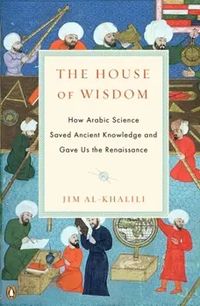
HouseOfWisdom_Khalili_bookCover_200pxW_72dpi.jpg


The House of Wisdom: How Arabic Science Saved Ancient Knowledge and Gave Us the Renaissance, by Jim Al-Khalili. (2012)

If the last time you read about the European Renaissance was high school, then much of the material in this book may come as a shock.

There was a glorious (and relatively brief) flowering of knowledge, research, science and ancient manuscript rescues and translations during a window of time between about 750 AD and 950 AD, under the Abbasid Caliphate, centered in Baghdad. That is the time when much of the philosophy, physics and other learned speculation from ancient Greece was rescued from oblivion. At the same time, many brilliant Persians, Christians and Jews joined in those efforts, to gather other major advances from China and India.

We see the birth of true scientific methodology, innovative number systems (like the so-called Arabic numerals) and decimal mathematics. Algebra was invented. Optics studied, and its rules defined. Solutions to the quadratic equation were demonstrated. Early methods in calculus were explored. Geolocation was dramatically improved. Massive libraries were built, and staffed with the finest scholars.

Like all "golden ages", this one burst onto the scene, then faded. Much of that work was transferred in subsequent centuries to the Muslim caliphates in Iberia (today's Spain)—al Andalus, from which it began to slowly seep into an intellectually dozing Europe, in the form of translations into Latin. That is, until the 13th century, when Christian forces eventually drove the Muslims out. That was the so-called reconquista.

The author has been a long-time science journalist for the BBC.

Bob
 

deluxestogie

Administrator
Staff member
Joined
May 25, 2011
Messages
26,631
Points
113
Location
near Blacksburg, VA
"Reading for pleasure may have surprisingly powerful benefits for the brain, with studies linking it to better memory, reduced stress, improved mental health, and a lower risk of dementia. Researchers highlight findings that just five minutes of fiction can reduce stress by up to 20%, while reading has also been associated with a 33% lower risk of Alzheimer's disease."​
​
"...the format and type of reading matter less than the enjoyment people get from it."​

I'm not sure if I read for pleasure or because I am addicted to reading. Either way, I enjoy reading.

Bob
 

deluxestogie

Administrator
Staff member
Joined
May 25, 2011
Messages
26,631
Points
113
Location
near Blacksburg, VA
a real book
I enjoy the physical feel of a printed book, its weight in my hands, and the pacing of turning physical pages. A physical, printed book will still exist when the power goes out. There is also something charming about purchasing a somewhat tattered, used book, and giving it yet another life.

Bob
 

deluxestogie

Administrator
Staff member
Joined
May 25, 2011
Messages
26,631
Points
113
Location
near Blacksburg, VA
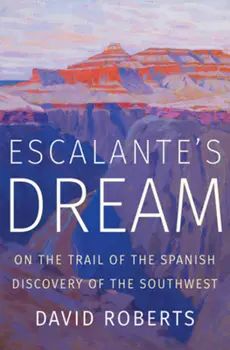
Escalante_DavidRoberts_bookCover_230pxW_72dpi.jpg


Escalante's Dream: on the Trail of the Spanish Discovery of the Southwest, by David Roberts. (2019, 2020)

The subject of this book serves as an example of how fickle, unreliable and yet inspiring accepted history can be. In the year 1776, two Spanish padres, Atanasio Domínguez and Silvestre Vélez de Escalante, began an expedition from Santa Fe (in present day New Mexico) toward the northwest, to (maybe) identify a potential land route to the newly established Spanish mission of San Diego (in present day California). At that time, Spain claimed the majority of the land that now comprises the contiguous 48 states of the US, including the vast swath that later became the "Louisiana Purchase".

[In 1776, latitude measurement, that is, how far north of the equator, was relatively accurate. So the Spanish knew the latitude of San Diego. But there was still no practical way to measure longitude—the east-west distance. They had to guess how far west of Santa Fe the colony of San Diego lay.]

Escalante (about 27 years old) wrote the only existing narrative of the journey. It was a vague accounting of locations and events, interspersed with remarkable claims of entire Indian tribes being gleefully converted to Roman Catholicism following a single sermon in Spanish by Domínguez, relayed through a native translator (from a different tribe that spoke a different dialect from that of the listeners).

Two centuries later, modern promoters of historic trail tourism attempted to identify and advertise the path of the Domínguez-Escalante (D-E) expedition. Much of this newly declared path was wishful thinking.

Our author, David Roberts, together with his wife, try to tease apart the well-documented from the fiction about the D-E expedition, during a road trip in 2017. Interspersed with his commentary about the likely and unlikely locations and events of that 1776 expedition, we find autobiographical intrusions of his personal health issues. In his 70's, Roberts is coping with multiple, permanent, medical side effects of his recent treatment for advanced throat cancer. He (and the reader) is aware that this may be his last significant journey.

I have read (and reviewed above) a number of books on the Anasazi, written by Roberts. I found that my joy in learning about the most likely events of the D-E expedition in this present book was frequently jolted by the depressing details of Roberts' health. I forgive him. But it alters the emotive impact of the supposed subject of the book. Perhaps Roberts is the actual subject, and the book title is simply misleading.

Bob
 
Top