
I have just finished reading once again through a number of Sherlock Holmes stories. These were a selection in a file I had downloaded to my Kindle quite some time ago. It is by no means an exhaustive compendium, but it’s always good to spend some time near the fire in the Baker Street room with an ounce of shag and a cherrywood. I’ll leave Mr. Holmes’ morning pipe to him, though.

You are using an out of date browser. It may not display this or other websites correctly.
You should upgrade or use an alternative browser.
You should upgrade or use an alternative browser.
Reading Lamps and Smoking Jackets
- Thread starter Knucklehead
- Start date


The Medieval Machine: The Industrial Revolution of the Middle Ages, by Jean Gimpel. (1977)
Table of Contents:
- Energy Resources of Europe and Their Development
- The Agricultural Revolution
- Mining and Mineral Wealth of Europe
- Environment and Pollution
- Labor Conditions in Three Medieval Industries
- Villard De Honnecourt: Arhitect and Engineer
- The Mechanical Clock: The Key Machine
- Reason, Mathematics, and Experimental Science
- The End of an Era
- Epilogue
One thing I found interesting in the first chapter is that there were extensive for-profit corporations in western Europe during the Middle Ages. They just happened to all be monasteries—many hundreds of them: Cistercians, Franciscans, etc. They subsidized new designs of water-powered machines of all sorts (grain mills, mineral ore mills, hammer forges, etc.), and brought in massive profits through their monopoly control.
Several hundred years of new technologies mostly constructed from wood, and processes requiring heat (e.g. smelting and forging) burning wood or charcoal, was all it took to erase the forests of western Europe. And it was during the dearth of wood that coal (mostly foul, low grade coal) came into use.
The trees were gone, the rivers were heavily polluted, and the air was fouled in every industrial center.
Around 1277 AD, church authorities began to feel threatened by science and technology, and proceeded to slam the door on education, new discovery and technical innovation. That is the "Dark Ages" that was later recalled by the scholars of the Renaissance.
While I found the first chapter a bit slow, most of the rest of the book is loaded with surprises. The author's Epilogue is an embarrassing example of what happens when a skilled historian of the distant past attempts to render his verdict on contemporary events.
Bob
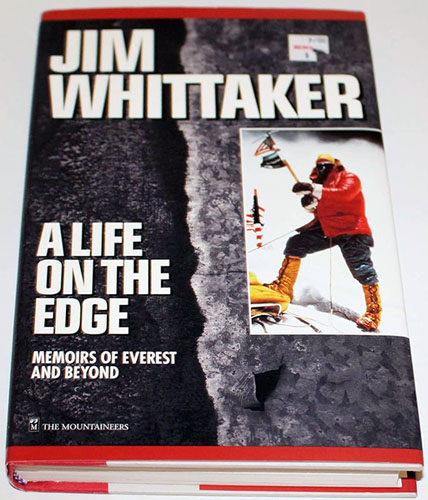
Life on the Edge: memoirs of Everest and beyond, by Jim Whittaker. (1999)
"...I believe the key to a life well lived—as distinct from the 'good life'—is discomfort."
Jim Whittaker, born in 1929, in a rural area of western Washington State, was the first American to summit Mt. Everest. He was the single employee of a specialty outdoors shop (one room in the 2nd floor of a building), providing local climbers with difficult to obtain, mountaineering gear, such as quality ropes, pitons, climbing harnesses. Whittaker nurtured that little shop to eventually become the business we know today as R.E.I. Jim Whittaker was also responsible for introducing Vibram soles to nearly all hiking boots made in the US.
If you happened to read the book, Into Thin Air, Jon Krakauer's 1998 account of a catastrophe on Mt. Everest during one particularly tragic season, Life on the Edge recounts numerous, similar adventures—some victorious, some tragic—in Alaska, Washington State, Tibet, Nepal, etc. This is a biography that starts in his childhood, and carries us through all the stages of his life, up to the age of 70 (at which point, he and his family were half-way around the world on a multi-year sail boat circumnavigation of the globe). He became close friends with the rich and famous, and was honored by US Presidents. He served as campaign manager for Robert F. Kennedy's presidential run—and RFK's assassination.
Jim Whittaker died in April of 2026, at the age of 97.
Bob
HillDweller
Well-Known Member
I did read Thin Air, I may have to add this one to the list.If you happened to read the book, Into Thin Air
Bob
Jon Krakauer discusses his PTSD (post traumatic stress disorder) 30 years later.If you happened to read the book, Into Thin Air, Jon Krakauer's 1998 account of a catastrophe on Mt. Everest

Jon Krakauer reflects on 30 years since surviving deadly Mount Everest climb
May marks 30 years since the deadly Mount Everest disaster that took the lives of eight people. Journalist Jon Krakauer, who survived the climb, chronicled the tragedy in his bestselling book "Into Thin Air." Krakauer joins to discuss the book's rerelease and his regrets.
www.cbsnews.com
Bob
EDIT: Krakauer's comment regarding the impact of his presence on the behavior of others brings to my mind Heisenberg's Uncertainty Principle. The act of observing (measuring) always impacts what is being observed.
Last edited:

Mountains of the Heart: A Natural History of the Appalachians, by Scott Weidensaul. (1994)
One thing I noticed, on opening the book, was that the author, Scott Weidensaul, had actually signed the title page (with the pressure mark of his pen evident on the reverse side of that page).
This book is a wide-ranging discussion of the geologic, geographical, biological and human aspects of the Appalachian mountain range, which stretches from Alabama to Maine, and even into the Canadian Maritimes. (Geologically, it also includes the Scotish highlands, which parted ways with North America quite a while back.)

The opening chapter explains how, in the Appalachians, there are mountains in which the truly ancient rock layers ended up on top of of rock layers deposited millions of years later. Subsequent chapters address categorical topics, such as predatory birds, relict trees from the last ice age, aquatic and semi-aquatic life, peat bogs, elk, moose, deer, bison, etc. The author explains the numerous (generally severe) biologic impacts of human behaviors, like clear-cut logging, the intentional introduction of non-native species, as well as engineering projects: dams and artificial lakes. Every "benefit" comes with a cost—occasionally anticipated but usually a surprise.
Chapter by chapter, the book seems to cary a story of relentless change, always with a soft undercurrent of tragedy.
Bob
Parental Advisory: This is a dirty book.
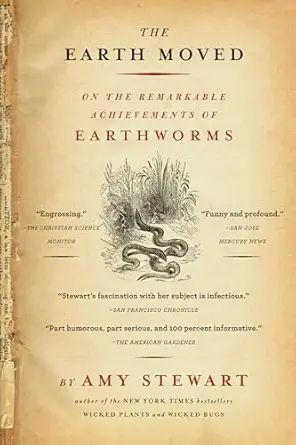
The Earth Moved: on the remarkable achievements of Earthworms, by Amy Stewart. (2004)
Although the spine of this paperback is clean and tidy, the front and back covers have been carefully designed to look like it has been repeatedly handled by a gardener with dirty hands. Or perhaps the cover was made from paper recovered from a compost bin.
The central image of the front cover is from Charles Darwin, who was the first scientist to seriously study the earthworms beneath our feet. Earthworms are known to drag fragments of leaf into their tunnels. Darwin proved that they selectively pull the stem-end of the leaf or leaf fragment into the tunnel opening, in preference to the wider edge of the leaf. That is...earthworms make decisions!
With up to one million earthworms per acre of land, thinking about earthworms beneath your garden might influence some of your choices. The author cites one study that seemed to indicate that the increased nutritional values documented in "organically" grown fruits and vegetables (when compared to "conventionally" grown fruits and vegetables) may be directly attributable to the abundance of earthworms that survive in soil that has not been chemically treated. [Bob says that "organically" grown crops consistently perform at a lower productivity per acre than "conventionally" grown crops. So the same quantity of output requires greater acreage.]
If you tend a garden, or if you grow your own tobacco, then you will find Stewart's book (~200 pages) delightful as well as truly informative.
Bob
The Earth Moved: on the remarkable achievements of Earthworms, by Amy Stewart. (2004)
Although the spine of this paperback is clean and tidy, the front and back covers have been carefully designed to look like it has been repeatedly handled by a gardener with dirty hands. Or perhaps the cover was made from paper recovered from a compost bin.
The central image of the front cover is from Charles Darwin, who was the first scientist to seriously study the earthworms beneath our feet. Earthworms are known to drag fragments of leaf into their tunnels. Darwin proved that they selectively pull the stem-end of the leaf or leaf fragment into the tunnel opening, in preference to the wider edge of the leaf. That is...earthworms make decisions!
"Darwin continued in this manner, testing them for each of their senses. He blew a loud whistle and found they did not respond to sound. He placed his pots of worms on the piano and played, which sometimes caused them to dash into their burrows. Clearly, he concluded, the worms were sensitive to vibrations. That realization led him outside to beat on the ground, testing the hypothesis that worms come out of their burrows if they believe they are being pursued by a mole. Unable to rouse any worms by pounding on the dirt, he moved on to the subject of smell.
'They were quite indifferent to my breath, as long as I breathed on them gently', he reported. 'They exhibited the same indifference to my breath, whilst I chewed some tobacco...'"
With up to one million earthworms per acre of land, thinking about earthworms beneath your garden might influence some of your choices. The author cites one study that seemed to indicate that the increased nutritional values documented in "organically" grown fruits and vegetables (when compared to "conventionally" grown fruits and vegetables) may be directly attributable to the abundance of earthworms that survive in soil that has not been chemically treated. [Bob says that "organically" grown crops consistently perform at a lower productivity per acre than "conventionally" grown crops. So the same quantity of output requires greater acreage.]
If you tend a garden, or if you grow your own tobacco, then you will find Stewart's book (~200 pages) delightful as well as truly informative.
Bob
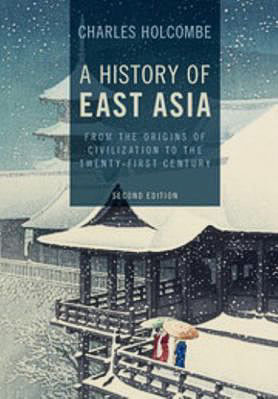
A History of East Asia: from the origins of civilization to the twenty-first century, by Charles Holcombe, 2nd ed. (2017)
"The First Emperor of Qin...initially made a display of promoting traditional values by appointing seventy scholars as advisors to the throne. Continued dissent, especially criticism of the Qin regime by comparing it unfavorably to the idealized memory of antiquity, proved intolerable, however. In 213 BCE, the First Emperor notoriously ordered the burning of all books, except for histories of the Qin state and a few useful technical treatises. In 212 BCE, he reportedly went further and ordered the execution, for subversion, of 460 scholars. In Confucian memory, these two horrifying acts became indelible emblems of Qin tyranny.
The First Emperor was also deeply interested in arcane techniques for prolonging life and may have envisioned himself as a god figure (di), wielding cosmic power to align the universe. Perhaps the ultimate example of his self-aggrandizement may be the enormous tomb that he had constructed for himself. The tomb, which is twenty miles in circumference, contains, as just one small part, and entire terracotta army consisting of thousands of life-sized clay soldiers, which was buried and only recently rediscovered by accident. Thus, though the First Emperor's reputation may have been darkened by Confucian biases under subsequent dynasties, the staggering scale of his ambition was real enough."
Following a discussion of the Chinese language and the origins of its pictographic nature, the basic history of China's earliest dynasties carries the reader up to about 300 AD. The spread—and dramatic re-definition—of Buddhism into the Far East is an example of how religions evolve in different cultures. [It evolved into pretty much the opposite of what Siddhartha Gautama had originally asserted!] And it was the spread of Buddhism that carried writing and literacy, first from China to Korea, and then from Korea to Japan.
This book covers the detailed histories of China, Korea, Japan and Viet Nam, up to 2017.
Overall, what surprised me most was my realization that civilization in China finally arose nearly 1000 years later than the rise of civilizations in the Middle East.
My favorite quote:
"The mobility made possible by ease of transportation also encouraged increasingly large-scale recreational tourism. By late Ming [1368 to 1644 AD!], it had become common to complain that 'crowds of tourists' and souvenir vendors were spoiling the tourist attractions."
I had expected that the more modern periods of east Asian history would be mostly familiar material, but I was unaware of how much of it I had not known.
Bob
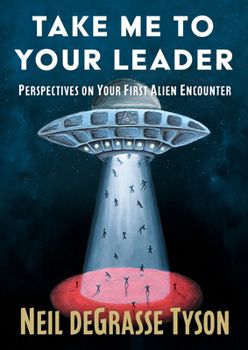
Take Me to Your Leader: Perspectives on Your First Alien Encounter, by Neil deGrasse Tyson. (2026)
This little book is science writing at its very best: informative, hilarious, and aimed at non-scientists, but with scientific clarity. Neil deGrasse Tyson, a renowned astrophysicist, is a fairly staid personality when you see him on TV. In this entertaining book, he has no qualms about using vivid expressions that would make TV censors cringe. [You'll have to read the book, to see what I mean.] Some of his clarity is part of the hilarity.
"The abbreviation 'UFO' uses 'Unidentified' as its first word, preceding 'Flying Object.' A perfectly sensible way to ID something you don't understand or can't identify. But one cannot overemphasize a simple truth: Just because you don't know what you're looking at does not mean you know what you're looking at. Of course, the question-loving skeptic must always retain an open mind, but not so open that your brains spill out, losing all ability to analyze the evidence before you.
Along the course of the book, he comments on probably every "alien" and UFO movie ever shown on the big screen, as well as classic TV shows like Twilight Zone, Star Trek, etc., and "alien" cartoons.
Bob

Pasiasiainen
Well-Known Member
Patrik Svensson
The Gospel of the Eels: A Father, a Son and the World's Most Enigmatic Fish

This book has fascinated me so much that I thought I'd share it here. It's the only book I've ever read (or listened to) three times.
If you're not familiar with eels, I can promise that the first time you read it, you'll be amazed by just how extraordinary they are.
Svensson's book is both a fascinating nonfiction and a deeply moving story about eels and the people whose lives are connected to them.
Along the way, you'll also discover what Sigmund Freud had to do with eels.
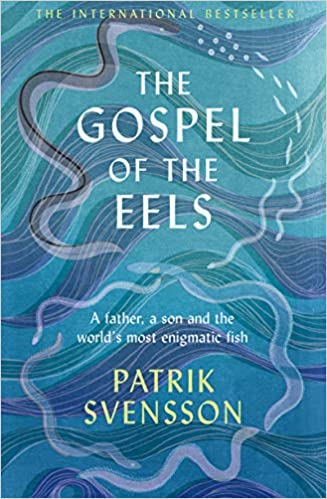
The Gospel of the Eels: A Father, a Son and the World's Most Enigmatic Fish
This book has fascinated me so much that I thought I'd share it here. It's the only book I've ever read (or listened to) three times.
If you're not familiar with eels, I can promise that the first time you read it, you'll be amazed by just how extraordinary they are.
Svensson's book is both a fascinating nonfiction and a deeply moving story about eels and the people whose lives are connected to them.
Along the way, you'll also discover what Sigmund Freud had to do with eels.
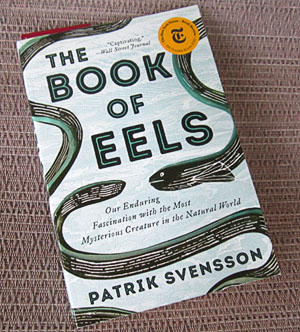
From what I can tell, The Gospel of the Eels is the same book as "The Book of Eels: Our Enduring Fascination with the Most Mysterious Creature in the Natural World
By Patrik Svensson". They have different ISBN numbers, but were published around the same time, by the same author. Their page count is similar.
Bob
By Patrik Svensson". They have different ISBN numbers, but were published around the same time, by the same author. Their page count is similar.
Bob
Pasiasiainen
Well-Known Member
Yes, that’s correct. I think ”The Gospel…” is the UK title, while ”The Book…” is the US title. There’s also ”The Book of Eels” by Tom Fort, which shouldn’t be confused with the latter.From what I can tell, The Gospel of the Eels is the same book as "The Book of Eels: Our Enduring Fascination with the Most Mysterious Creature in the Natural World
By Patrik Svensson". They have different ISBN numbers, but were published around the same time, by the same author. Their page count is similar.
Bob
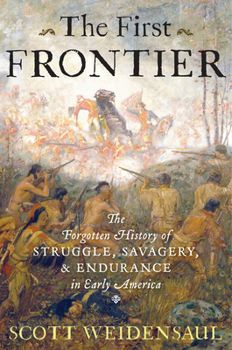
The First Frontier: The Forgotten History of Struggle, Savagery, and Endurance in Early America, by Scott Weidensaul. (1970)
Actual history is messy. Elementary school students in the US are taught a set of foundational myths about the early European colonies and colonists in North America. This book tells, as best as actual history allows, some factual stories of those early centuries—stories that deflate the myths.
An example myth is that the Pilgrims who landed at Plymouth Rock were seeking religious freedom in the New World. In fact, those Puritans were seeking the freedom to enforce their own particular belief system, beyond the onerous reach of the church hierarchy in England. And their specific journey to Plymouth Rock was funded by a coalition of (religiously uninterested) wealthy individuals who expected to earn a massive profit on the beaver pelts to be obtained and shipped back to England by those Pilgrims. It was a corporate business venture.
Many of the major conflicts between the Native American Indian tribes and European colonists were precipitated by the indescriminate theft, kidnapping and murders of Indians by colonists. When imported European diseases would wipe out 80 or 90% of a native tribe, the colonist's religious leaders would give thanks in their sermons. There was indeed unspeakable cruelty practiced on both sides of the conflicts.
I was previously aware that colonists sometimes enslaved Indians. What I recognized from this account is that slave trading became a vastly profitable business for native tribes. The numbers of Indians captured by other tribes of Indians skyrocketed. And they would march them off to colonial slave traders on the coast. There, the newly enslaved Indians would be sold to slave traders in the Caribbean—to work the sugar plantations, or to wealthy landowners among the colonists. It was this exponential growth of the enslavement of Indians that created the southern, slave plantation economy. But then, many of the weaker tribes collapsed and vanished from east of the Appalachian Mountain range. Not enough slaves! Plan B, truly blossoming in the early 1700s, was the explosion of the trans-atlantic trade of African captives (again almost exclusively captured by other tribes, though now by African tribes, and sold to European traders) to North America. In essence, Black slavery in North America predominated for the next 1½ centuries because of the exhaustion of Native Indians as a ready source of slave labor.
I found some of the accounts sickening. If you prefer to live with the more comfortable myths, then this book is not one that you will enjoy reading. If, instead, you are interested in the actual history, it is covered here in agonizing detail. The First Frontier was published over a half-century ago, so we can assume that many folks continue to prefer the myths.
[One more curious tidbit: We read in most history books that George Washington served as a young British colonial officer in a brief skirmish with the French in western Pennsylvania. He was inexperienced and untrained at that time. Of course, he later went on to lead the colonial troops to victory over the British during the American Revolution. What is usually omitted is the fact that European outrage over the rash actions of that young, inexperienced officer in that earlier "skirmish" (essentially assassinating a French diplomatic envoy) actually triggered what became the "French and Indian War" (know in Europe as the Seven Years War). The Seven Years War was the world's first truly global conflict. Young George Washington precipitated it!]
Bob's Denouement: In 1763, King George III issued a proclamation forbidding colonists from moving into "any lands beyond the Heads or Sources of Rivers that fall into the Atlantick Ocean." That so-called Proclamation Line follows the Eastern Continental Divide. As I look out across the pasture from my front porch, I must confess that I am about 120 yards "beyond" the Proclamation Line. Oops!
Bob
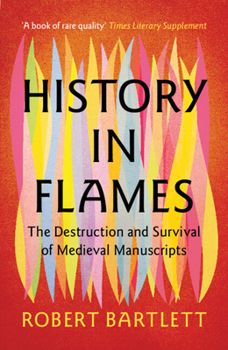
History in Flames: The Destruction and Survival of Medieval Manuscripts, by Robert Bartlett. (2025)
The so-called "Dark Ages" (the Medieval period) have been considered "dark" because of their relative lack of creative output such as written material. In reality, the Medieval period was not "dark" at all. Today, there are estimates that over a million manuscripts on numerous topics were produce during that period. The period is "dark" only because most of those manuscripts have been forever lost, with no copies surviving. Estimates range from 85% to 95% of all Medieval manuscripts have vanished without a trace.
In this book, Bartlett explores what happened to all those lost documents. Prior to the advent of printed books, a manuscript existed as only a single copy, until it was laboriously hand copied by someone. Where were they stored? How were they stored? Did someone decide they were worthless?
The author compares, in one example, that the Reformation in England was like an asteroid strike on the vast libraries maintained by the hundreds of (Roman Catholic) monasteries in that country. In other instances, common people regarded writing itself (i.e. literacy) as the cause of their oppression by the "educated" wealthy, and sought out written records to destroy. [If you can read this book review, then you are suspect!]
If you are a history entusiast, then you may find this short book (less than 200 pages of text) interesting. Otherwise, its greatest value is in highlighting the notion that history is only what is preserved in some way: physical things—ruins, artifacts, written records. When those physical things completely disappear, then it leaves a blank in history. Or worse, it biases the interpretation of history in favor of a tiny, surviving sample of what once existed.
Another observation is that the effort by many government bodies during the 19th century to gather rare manuscripts into special repositories—for the sake of safeguarding them, led to single points of failure. As a result, the destruction of a single building, for example, might thereby destroy all of the documentary treasures of a region. The author recounts such events during various wars of the 19th and 20th centuries.
But think for a moment about all our digital assets. Will they still exist in 100 years? In 10 years?
Bob

I'm sure am lot of it will be retained, but I wouldn't be surprised to know that some folks will silently delete certain things, or at least watch those who read them.
Gotta love the people who think you should only know what they want you to know...
Gotta love the people who think you should only know what they want you to know...
Last edited:
My copy arrived today. Thanks for the review.This book has fascinated me so much...
Bob
Pasiasiainen
Well-Known Member
Oh, I completely forgot to wish you happy reading! I was traveling, so I didn’t have much time to reply. Hope you enjoy the book!My copy arrived today. Thanks for the review.
It is a wild book! Biology, philosophy (Aristotle to Nagel), epistemology, scientific methodology, theology, father-son relationships, time scales of life, a 19 year old Sigmund Freud searching for eel testicles in Trieste. And I still have about 35 pages to go.
[When my own son was five years old, and I was 35, we stood fishing on a tiny dock along a quiet branch of Okaloosa Bayou, at Ft. Walton Beach, Florida. He caught a lovely pan fish—his very first fish. I caught an eel. Returning home, he cried when I cooked his fish. He did not cry when I cooked the eel.]
Bob
[When my own son was five years old, and I was 35, we stood fishing on a tiny dock along a quiet branch of Okaloosa Bayou, at Ft. Walton Beach, Florida. He caught a lovely pan fish—his very first fish. I caught an eel. Returning home, he cried when I cooked his fish. He did not cry when I cooked the eel.]
Bob

BarG
Founding Member
Keep it simple stupid, words to live by.Gosh. My son handed me his copy of Rogue Warrior to read—when he was in high school. He's now 47.
Bob
BarG
Founding Member
I read first in the early 90's ,30 + years ago, I had to reorder since my original copy was loaned out. Gonna send this one to my nephew, he used to be an advance team in communication for Obama when he was in the military.Gosh. My son handed me his copy of Rogue Warrior to read—when he was in high school. He's now 47.
Bob
Similar threads

- Replies
- 7
- Views
- 3K

- Replies
- 17
- Views
- 5K


- Replies
- 0
- Views
- 2K
-
About Us
This forum is dedicated to promoting the American tobacco farmer and tobacco home growers across the globe. Whether you grow by the acre, in your backyard, or in pots, you should find valuable and accurate information here.We discuss any variety of tobacco, as well as numerous approaches to growing, harvesting, curing, and finishing your crop. Our members will attempt to provide experience-based answers to your questions.
-
Buy raw tobacco from our Sponsor - WLT